Best Dual Flash Drive for a Home Office Desk

A dual-connector drive lives or dies on whether the USB-C end clears your phone case and whether the capacity matches your files. Six picks, ranked by what actually decides it.

By Samuel HarrisUpdated 17 min read
On this page
- Best dual flash drive for remote workers at a glance
- How I screened these six dual flash drives
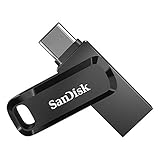
- 1. SanDisk 128GB Ultra Dual Drive Go USB Type-C Flash Drive — Best overall
- 2. SANDISK 512GB Extreme PRO Dual Drive — Best warranty
- 3. PNY 2TB Duo Link V3 USB 3.2 Gen 2 Type-C & Type-A OTG — Best premium
- 4. fanxiang F372S 128GB USB Flash Drive — Best minimal setup
- 5. KOOTION 64GB Dual USB-A & Type-C Flash Drive up to 110MB/s — Best upgrade
- 6. MOSDART 16GB USB C & USB A 2.0 Swivel Dual Flash Drive — Best budget pick
- Does a dual flash drive actually keep remote work data safe?
- Which connector end fails first?
- How much capacity does a remote worker really need?
- What more money buys across these six
- The verdict
- FAQ
The best dual flash drive for remote workers is the SanDisk 128GB Ultra Dual Drive Go, because it pairs a reversible USB-C end with a Type-A end in a body that weighs just 3.7 g. If your files run into hundreds of gigabytes, the PNY 2TB Duo Link V3 is the better buy at 2TB. Getting this wrong is expensive in a specific way. You buy a drive, discover the USB-C plug won't seat through your phone case, and it becomes a Type-A-only stick you paid a premium for.
Best dual flash drive for remote workers at a glance
| Pick | Capacity | Claimed read speed | Price |
|---|---|---|---|
| 128 GB | 150MB/s claim | Check Price | |
Best warranty SANDISK 512GB Extreme PRO Dual Drive |
512GB | 1,000MB/s claim | Check Price |
| 2TB | 1000MB/s claim | Check Price | |
Best minimal setup fanxiang F372S 128GB USB Flash Drive |
128GB | 150MB/s claim | Check Price |
Best upgrade KOOTION 64GB Dual USB-A & Type-C Flash Drive |
64GB | 110MB/s claim | Check Price |
Best budget pick MOSDART 16GB USB C & USB A 2.0 Swivel Dual Flash Drive |
16GB | USB 2.0 | Check Price |


How I screened these six dual flash drives
Every drive here had to publish two things: a capacity figure and a dual USB-C plus USB-A connector arrangement. That second requirement cut more listings than you'd expect, because "USB-C compatible" often means an adapter in the box rather than a second plug on the body.
From there I lined up the published specifications side by side and sorted on four columns:
- Capacity, which spans 16GB to 2TB across this set. That's a 128-fold range.
- Published interface generation, from USB 2.0 up to USB 3.2 Gen 2.
- Warranty length, where four of the six state a term of three years or longer.
- Weight, listed for four of the six, from 3.7 g to 22.7 g.
What got cut was anything without a stated capacity, anything single-connector, and anything where the interface generation wasn't published at all. Speed claims I record as claims, because they're the manufacturer's figures rather than independent measurements.
One honest limitation. The keyword asks for a drive suited to remote work, and none of these listings publishes anything specific to remote work: no managed encryption suite, no fleet provisioning, no IT-friendly features. The best dual flash drive for remote workers is therefore a drive that happens to suit the job well, judged on capacity, connectors and durability. I'll flag where the data goes quiet.
1. SanDisk 128GB Ultra Dual Drive Go USB Type-C Flash Drive — Best overall
At 3.7 g with a reversible USB-C end and a five-year warranty, this is the drive that disappears into a pocket and still handles a day's file shuffling.
Best for: moving files between a Type-C phone and a Type-A work laptop daily Skip it if: you handle multi-hundred-gigabyte video projects
Weight is the differentiator here. At 3.7 g, this is the lightest drive in the set by a wide margin, roughly a sixth of the 22.7 g Extreme PRO. That matters more than it sounds. A light drive stays on a keyring without dragging, and it doesn't lever sideways in a laptop port when the machine is on your lap.
SanDisk calls the USB-C connector reversible, which means you're not squinting at orientation while on a call. The listing claims USB 3.1 Gen 1 with read speeds up to 150MB/s, and notes write speeds are lower and vary by capacity. There's also a Memory Zone app for automatic photo backup, which SanDisk says requires a download and install. The listing also specifies your phone needs a USB-C port with On-The-Go support, so check that before you order.
The five-year limited warranty is the second-longest term published in this group. Capacity is where it gives ground. 128 GB is fine for documents, decks and a photo library, but it's a quarter of the Extreme PRO and a fraction of the PNY. Only one seller lists this drive, too.
Pros:
- Lightest drive here at 3.7 g
- Reversible USB-C end, no orientation fumbling
- Five-year limited manufacturer warranty
- 150MB/s read speed claim on USB 3.1 Gen 1
Cons:
- 128 GB is a quarter of the Extreme PRO's capacity
- Write speeds not published, only stated as lower
- Photo backup needs a separate app installed
- Only one seller lists it
2. SANDISK 512GB Extreme PRO Dual Drive — Best warranty
A lifetime limited warranty and a 1,000MB/s read claim in a metal body, for the person who wants the drive covered longer than the laptop.

Best for: anyone who wants a warranty that outlives the drive Skip it if: you want the lightest thing in your bag
The warranty is the reason this sits at number two. Lifetime Limited is the only open-ended term among these six, where the rest publish one, two, three or five years. For a drive you'll carry for years and eventually drop, that's a real difference rather than a marketing line.
Capacity is 512GB, four times the Ultra Dual Drive Go. SanDisk claims up to 1,000MB/s read and 900MB/s write, and describes a metal design engineered for resilience. The listing also mentions encryption technology, though it doesn't state which standard or whether setup is required, so treat it as a claim to verify on the product page rather than a spec you can rely on.
The trade-off is bulk and price position. At 22.7 g it's the heaviest drive here, six times the SanDisk Ultra, and it's the second-most expensive of the six. The stated dimensions of 0.1 x 3.2 x 0.7 in also suggest a longer body than the compact fanxiang. Two sellers list it, which is the widest availability in this group.
Pros:
- Only lifetime limited warranty in the set
- 512GB, four times the Ultra Dual Drive Go
- 1,000MB/s read and 900MB/s write claims
- Metal housing, listed as encryption-capable
Cons:
- Heaviest here at 22.7 g
- Encryption standard not specified in the listing
- Second-highest price position in this group
- Longer body than the compact picks
3. PNY 2TB Duo Link V3 USB 3.2 Gen 2 Type-C & Type-A OTG — Best premium
2TB on a stick with a USB 3.2 Gen 2 interface, which is the only pick here that can hold a full video project rather than a folder from one.

Best for: editors carrying whole project folders between machines Skip it if: your documents fit in a few gigabytes
2TB is four times the Extreme PRO and 128 times the MOSDART. That single number is the whole argument. If your work involves 4K footage, RAW photo sets or virtual machine images, no other drive in this comparison is in the conversation.
PNY publishes USB 3.2 Gen 2 as the interface, the newest generation here, with claims of up to 1000MB/s read and 800MB/s write. The listing states compatibility with USB 3.2 Gen 2 desktops and laptops, with backwards compatibility to Gen 1, USB 3.0 and USB 2.0 hosts. Mobile transfer is called out for iPhone 15, third-generation iPad and newer, and Android phones and tablets.
Where it gives ground is documentation and cover. The warranty is 2 Year Limited, shorter than the SanDisk Ultra's five years and far shorter than the Extreme PRO's lifetime term. No weight or dimensions are published, so you can't judge how it sits in a port before it arrives. It's also the most expensive pick here, and only one seller lists it.
Pros:
- 2TB, the largest capacity in this set
- USB 3.2 Gen 2, the newest interface here
- 1000MB/s read and 800MB/s write claims
- Backwards compatible down to USB 2.0 hosts
Cons:
- Two-year warranty, shortest among the SanDisk and fanxiang picks
- No published weight or dimensions
- Most expensive pick in this comparison
- Only one seller lists it
4. fanxiang F372S 128GB USB Flash Drive — Best minimal setup
A 13 g zinc alloy drive with a 360-degree rotating cap and no driver or software to install, matching the SanDisk Ultra's 128GB at a lower price position.

Best for: a plug-and-play drive with no app or account to set up Skip it if: you need a published warranty longer than three years
This is the same 128GB capacity as my top pick, sitting one position lower on price. fanxiang publishes a body measurement of 44 x 12.3 x 7.3 mm, which is the most precise dimensional figure in this group and small enough to vanish in a coin pocket.
The build is the selling point. fanxiang describes a zinc alloy housing with integrated packaging technology, which it says protects internal components and helps with heat. Weight is 13 g, mid-pack here: heavier than the SanDisk Ultra's 3.7 g, lighter than the Extreme PRO's 22.7 g. The 360-degree rotating cap covers whichever end you're not using, which is the sensible answer to lint in a pocket.
Setup is genuinely nothing. The listing states no driver or software installation, with OTG support across Windows, macOS, Linux and Android. Read speeds are claimed up to 150MB/s on USB 3.2 Gen 1. The 3 Year Manufacturer warranty is respectable but two years shorter than the SanDisk Ultra's, and there's no encryption feature mentioned at all, which the Extreme PRO does claim.
Pros:
- 128GB at a lower price position than the SanDisk Ultra
- Zinc alloy housing with published 44 x 12.3 x 7.3 mm body
- No driver or software install required
- 360-degree rotating cap protects both ends
Cons:
- Three-year warranty against SanDisk's five
- No encryption feature mentioned in the listing
- Heavier than the SanDisk Ultra at 13 g
- Only one seller lists it
5. KOOTION 64GB Dual USB-A & Type-C Flash Drive up to 110MB/s — Best upgrade
64GB with a USB 3.2 Gen 1 interface and a keychain hole, at the second-cheapest position here, which makes it the sensible step up from a 16GB stick.

Best for: a cheap second drive to keep in a laptop bag permanently Skip it if: you want detailed published specifications before buying
Quadrupling capacity over the MOSDART for one price step is the argument. 64GB is enough for a large document archive, a slide deck library and a decent chunk of photos, and KOOTION publishes USB 3.2 Gen 1 with read speeds claimed up to 110MB/s. That's the third-fastest claim in this set, behind the two 1,000MB/s picks.
The keychain hole is a small thing that matters for remote work. A drive clipped to keys is a drive you actually have with you, rather than one in a desk drawer at home. KOOTION states compatibility with Windows, Android, Linux and macOS, and calls out USB-C iPhone 15 through 17 and iPad Pro 13-inch.
The specification sheet is the thinnest here. No weight, no dimensions, no model release year, and the capacity field reads "USB3.1 1Pack 64GB", which mixes an interface label with a size. The 1 Year Manufacturer warranty is the shortest term in this comparison, one fifth of the SanDisk Ultra's. Green is the only listed colour, which some people will mind on a keyring.
Pros:
- Four times the MOSDART's capacity at 64GB
- 110MB/s read claim on USB 3.2 Gen 1
- Keychain hole for permanent bag or keyring carry
- Second-cheapest of the six
Cons:
- One-year warranty, shortest in this set
- No published weight or dimensions
- Capacity label mixes interface with size
- Green is the only stated colour
6. MOSDART 16GB USB C & USB A 2.0 Swivel Dual Flash Drive — Best budget pick
The cheapest of the six, and the only one with a longer USB-C plug specifically shaped to clear a phone case.

Best for: handing a signed PDF or a slide deck to someone in person Skip it if: you move photo or video files
One feature here is genuinely useful and nobody else in this set publishes it. MOSDART describes a longer USB-C port designed to slide past phone covers, plus a separate protective cap for the USB-C end. If you've ever pulled a case off a phone to seat a drive, that's the fix.
At 11.1 g with a published 0.1 x 2.69 x 0.8 in body, it's the second-lightest here. The 5-year warranty ties the SanDisk Ultra for the second-longest term in this comparison, which is unexpected on the cheapest pick. MOSDART lists compatibility with iPhone 15 through 17, Android phones, MacBooks, iPads, TVs and printers.
Then the hard limits. This is USB 2.0, the only drive here on that generation, and no read speed is published. Everything else claims 110MB/s or better. 16GB is the smallest capacity by a factor of four against the KOOTION and a factor of 128 against the PNY. Two RAW photo shoots would fill it. Buy this for documents and handoffs, not for a workflow.
Pros:
- Cheapest pick in this comparison
- Longer USB-C plug clears phone cases
- Separate protective cap for the USB-C end
- Five-year warranty, tying the SanDisk Ultra
Cons:
- USB 2.0, the slowest interface in this set
- 16GB, one quarter of the next-smallest pick
- No published read speed figure
- Only one seller lists it
Does a dual flash drive actually keep remote work data safe?
Short answer: not on its own. This is the gap in every listing here, and it's the honest limit of shopping for a dual flash drive for remote workers on a marketplace page.
Only one of these six mentions data protection at all. SanDisk says the Extreme PRO helps protect data with encryption technology, without naming a standard or explaining whether you have to switch it on. The other five say nothing about encryption, password protection or remote wipe. If your employer has a policy about removable media, that policy almost certainly outranks anything on the box.
Three practical points:
- Check the policy before the drive. Some organisations block unencrypted removable storage at the operating system level. A drive you can't mount is a drive you wasted money on.
- A flash drive is a courier, not an archive. Files that exist only on a stick you carry between rooms are one pocket-wash away from gone.
- Label the physical thing. A found drive with no owner marking gets plugged into a stranger's machine.
Treat the connector convenience as the feature you're buying and handle security separately, with full-disk encryption on the host and a real backup somewhere else.
Which connector end fails first?
The USB-C end, almost always, and for a reason that has nothing to do with the drive's electronics. The USB-C plug is smaller, and it's the end you jam into a phone dozens of times a week while the phone is in your hand and possibly in a case.
Two design details in this set address it directly. MOSDART publishes a longer USB-C port intended to clear phone covers, and adds a dedicated cap for that end. fanxiang uses a 360-degree rotating cap that swings over whichever connector is idle. The SanDisk Ultra Dual Drive Go takes a third approach with a swivel body, which shelters the plug inside the housing when retracted.
Materials matter too. fanxiang states a zinc alloy shell and SanDisk describes the Extreme PRO as metal, while the entry picks don't publish a housing material. Metal doesn't stop a bent plug, but it stops the housing cracking when the drive is levered sideways in a port.
Then there's warranty, which is your real backstop. The Extreme PRO's lifetime limited term is the longest here. The SanDisk Ultra and the MOSDART both publish five years. fanxiang publishes three, PNY two, KOOTION one. That spread of one year to lifetime is the widest gap in this entire comparison, and it costs nothing to weigh it.
How much capacity does a remote worker really need?
Here's the trick with capacity in this category: the number that decides it is not the biggest one available, it's the size of the largest single thing you regularly move. Most shoppers pick a dual flash drive for remote workers based on total library size, then overbuy by an order of magnitude.
Rough thresholds worth thinking in:
- Under 16GB of active files. Contracts, decks, spreadsheets, the occasional PDF pack. The MOSDART's 16GB covers it, and USB 2.0 speed on a 3MB document is irrelevant.
- 16GB to 64GB. A photo library, a few recorded meetings, design source files. The KOOTION's 64GB is the right shape.
- 64GB to 128GB. Mixed media work, screen recordings, a working set of assets. Both 128GB picks land here, and the SanDisk Ultra's 150MB/s read claim starts to earn its keep.
- Above 128GB. 4K footage, RAW sets, disk images. The 512GB Extreme PRO or the 2TB PNY.
Speed scales with those tiers in this set, which is convenient. The 16GB pick is USB 2.0. The 64GB and 128GB picks claim 110MB/s to 150MB/s on USB 3.2 Gen 1. The two large-capacity picks claim 1,000MB/s on USB 3.2 Gen 1 or Gen 2. Note that your host port caps the whole thing: a 1,000MB/s claim on an older USB 2.0 laptop port delivers USB 2.0 speeds.
What more money buys across these six
Moving up the price ladder in this group buys three things in a fairly clean order: capacity first, then interface generation, then housing and warranty. It does not reliably buy weight savings, which is worth knowing.
The cheapest pick gets you 16GB on USB 2.0 with a five-year warranty and the cleverest phone-case solution here. One step up doubles nothing and quadruples capacity to 64GB with USB 3.2 Gen 1, but the warranty drops to one year. That's an unusual trade, and it's the clearest case in this set of a lower price costing you cover rather than capability.
The middle two picks both land on 128GB with a 150MB/s read claim. fanxiang adds a zinc alloy shell, a precise 44 x 12.3 x 7.3 mm footprint and a three-year term. SanDisk sits one step higher and answers with 3.7 g, a reversible plug and five years.
The top two are a different conversation. 512GB or 2TB, 1,000MB/s read claims, and either a lifetime limited warranty or a two-year one. Notice that the most expensive pick here publishes the shortest warranty of the pair, and no weight at all. Paying more does not automatically buy better documentation.
The verdict
Three tiers, three answers.
Entry tier. If you move documents and nothing heavier, the MOSDART 16GB is enough. USB 2.0 is slow, but a five-year warranty and a longer USB-C plug that clears a phone case are real advantages on the cheapest pick in this set. Step up to the KOOTION 64GB only if you need the capacity, because you trade four years of warranty cover to get it.
Middle tier. This is where most people should land, and the SanDisk 128GB Ultra Dual Drive Go is the pick. 128 GB covers a working set of files, the 150MB/s read claim covers a day's transfers, 3.7 g means it genuinely stays on a keyring, and the five-year limited warranty is the second-longest term here. The fanxiang F372S matches its capacity and speed claim at a lower price position with a zinc alloy shell, so take that one if the housing and the smaller footprint matter more to you than two extra warranty years.
Premium tier. The SANDISK 512GB Extreme PRO Dual Drive wins on cover, with the only lifetime limited warranty in this comparison plus a 1,000MB/s read claim and stated encryption technology. The PNY 2TB Duo Link V3 beats it on exactly one axis, and it's decisive if it applies: 2TB, four times the capacity, on the newest USB 3.2 Gen 2 interface here. Above 512GB of working files, PNY is the only answer in this group.
FAQ
Is a dual flash drive worth it over a standard USB-A drive?
A dual flash drive is worth it if you regularly move files off a phone or tablet, because you skip the adapter entirely. All six picks here carry both a USB-C and a USB-A plug on one body. If every device you touch has a full-size USB-A port, the second connector adds nothing and you're paying for it.
Which is better value, the SanDisk Ultra Dual Drive Go or the fanxiang F372S?
Better value between those two comes down to housing versus warranty. Both offer 128GB with a 150MB/s read claim. The fanxiang F372S sits a price step lower with a zinc alloy shell and a published 44 x 12.3 x 7.3 mm body, but a three-year term. The SanDisk Ultra costs more and answers with 3.7 g and five years.
Will these drives work with an iPhone?
These drives work with recent USB-C iPhones according to their listings. MOSDART and KOOTION both name the iPhone 15 through 17 series, and PNY names iPhone 15 and newer. SanDisk states that a mobile device needs a USB-C port with On-The-Go support. Older Lightning iPhones have no USB-C port, so none of these connect directly without an adapter.
How fast is the best dual flash drive for remote workers in practice?
Real speed depends on your host port, not just the drive. The SanDisk Ultra claims 150MB/s reads on USB 3.1 Gen 1, and SanDisk states writes are lower and vary by capacity. Plug any of these into an older USB 2.0 port and you get USB 2.0 throughput regardless of the claim. Check your laptop's port generation first.
What mistake do people make buying a dual-connector drive?
The common mistake is ignoring plug length against phone case thickness. A standard USB-C tip can be too short to seat through a thick case, which turns a dual drive into a Type-A-only stick. MOSDART is the only pick here that publishes a longer USB-C port designed for that problem. Measure your case depth before ordering.
Start with the capacity tier that matches your largest regular transfer, then let warranty break the tie. That order gets you to the SanDisk 128GB Ultra Dual Drive Go for most home-office work, because 128 GB handles a real working set and 3.7 g means the drive is actually in your pocket rather than in a drawer. The unglamorous argument for it is availability of cover: five years is a long time for a thing that lives on a keyring and gets dropped. Buy the tier, not the headline number, and check your phone case clearance before the drive arrives.