Best Laptop for Everyday Use by RAM and Storage

Five everyday laptops compared on RAM, storage, weight and warranty, with a clear winner and the conditions that flip the pick to something else.

By Samuel HarrisUpdated 14 min read
On this page
- Best laptop for everyday use at a glance
- How I narrowed the field to five
- What actually decides an everyday laptop
- 1. HP New Everyday Slim Laptop — Best overall
- 2. HP Everyday Laptop — Best for families
- 3. Dell 15.6 Laptop, FHD — Best premium
- 4. Lenovo IdeaPad Slim 3i — Most versatile
- 5. KINOBUC Laptop Computer 15.6 inch — Best budget pick
- How much storage does everyday use really need?
- Is a 15-inch screen too big for daily carry?
- What the listings do not tell you
- The verdict
- FAQ
The best laptop for everyday use is the HP New Everyday Slim, a 5 lb Windows 11 machine with a 128GB SSD and DDR5 memory that handles email, browsing and documents without complaint. If you need more headroom for photos and downloads, the Dell 15.6 with a 512GB drive is the better buy. Most everyday-use guides compare processor generations. That is not what decides it here. Storage capacity and weight are, because they are what a daily user actually runs into.
Best laptop for everyday use at a glance
| Pick | Storage | Weight | Price |
|---|---|---|---|
Best overall HP New Everyday Slim Laptop |
128GB SSD | 5 lb | Check Price |
Best for families HP Everyday Laptop |
128GB SSD | 5 lb | Check Price |
Best premium Dell 15.6 Laptop, FHD |
512GB SSD | 4.19 lb | Check Price |
Most versatile Lenovo IdeaPad Slim 3i |
128GB SSD | not listed | Check Price |
Best budget pick KINOBUC 15.6 Laptop |
256GB SSD (expandable to 1TB claim) | 3.41 lb | Check Price |




How I narrowed the field to five
I compared the published listings for traditional Windows laptops sold as everyday machines and cut anything without a clear specification sheet. Three picks were disqualified before I started writing: models with no listed weight and no listed dimensions, models with no stated processor generation, and duplicate listings from the same seller. What survived is a set of five laptops that share a category path of Laptops › Traditional Laptops and cover the entry, mid and premium tiers.
The five differ on the axes that actually matter for daily use:
- Storage runs from 128GB up to 512GB.
- Weight runs from 3.41 lb up to 5 lb.
- Screen size clusters around 15.6 inches, though HP's two picks are the compact 12.7 by 8.8 in chassis instead.
- Warranty is only published on three of the five.
- RAM is only quantified in the manufacturer descriptions for three of the five.
A note on the search itself: Amazon returned laptops that vary in how well they fit the "everyday" label. Some listings lean toward light schoolwork, others toward home-office use. Treat the qualifier as your own judgment call rather than a promise the listings make.
What actually decides an everyday laptop
Most buyers compare processor names. For the best laptop for everyday use, that is the wrong lens. Every pick here runs Windows 11 and every pick is described by its manufacturer as suitable for browsing, email, video calls and document work. Where they actually diverge is storage and weight, because those two figures are the ones a daily user feels every week.
Storage decides how many years the laptop stays useful before you start deleting things. A 128GB SSD fills up quickly once Windows updates, Office and a few years of downloads land on it. A 512GB SSD gives room for photos, offline files and a couple of games without the constant housekeeping. Weight decides whether the laptop moves. A 3.41 lb machine goes in a tote bag without thought. A 5 lb machine stays on the desk.
RAM matters too, but only past a floor. The KINOBUC and the Dell both list 8GB, which is the comfortable minimum for multitasking. HP's Everyday listing mentions 4GB DDR5, and the Lenovo listing mentions 4GB LPDDR5. Four gigabytes is workable for one or two tabs and a document at a time, and it starts to feel tight beyond that.
1. HP New Everyday Slim Laptop — Best overall
A thin 0.7-inch Windows 11 laptop with DDR5 memory and a 128GB SSD, and the one buyers choose most often in this set.
Best for: someone who wants a thin Windows 11 laptop for browsing, email and documents Skip it if: you keep large photo or video libraries on the machine
This HP is the second-cheapest of the five and by a wide margin the fastest-moving in the set, which tells you buyers see it as the default everyday pick. The chassis measures 0.7 x 12.7 x 8.8 in and weighs 5 lb, so it sits at the compact end of this comparison on footprint even though it is not the lightest. HP describes the memory as next-generation DDR5, and the machine ships with Windows 11 and Copilot AI preloaded for on-device help with summaries and drafts.
The 128GB SSD is the one real reservation. That is enough for the operating system, Microsoft 365 and a working set of documents, but it fills up if you download videos or keep a local photo library. The Misty Blue finish is the only colour listed. The listing does not publish a warranty figure, which is unusual for HP and worth verifying at checkout.
Against the rest of this set, it trades storage for popularity: fewer files fit, but nothing else here in the entry band moves like this one does.
Pros:
- DDR5 memory claim
- Windows 11 with Copilot AI preloaded
- Compact 0.7 x 12.7 x 8.8 in footprint
- The one buyers choose most often here
Cons:
- 128GB SSD fills up quickly
- No published warranty
- 5 lb is heavier than the KINOBUC or the Dell
2. HP Everyday Laptop — Best for families
A near-identical HP in Soft Lavender with a published 1-year manufacturer warranty and a stated Intel N150 processor.

Best for: a shared home laptop for schoolwork, streaming and light office work Skip it if: more than one person needs to multitask on it at once
This is HP's Pavilion-branded sibling to the winner: same 0.7 x 12.7 x 8.8 in chassis, same 5 lb, same 128GB SSD, same DDR5 claim. The listing quantifies the processor as an Intel N150 with 4GB of memory, and it publishes a 1-year manufacturer warranty, which the winner's listing does not. The manufacturer's description mentions a 3.24 lb figure and up to 11.5 hours of video playback, but those numbers do not match the specification sheet's 5 lb, so treat them as marketing rather than measurement.
For a family machine, the Soft Lavender finish is a plus for shared use, and the warranty is a real advantage over the winner. The reason it lands second rather than first is the 4GB memory figure. That is workable for one user with a few tabs, and it gets tight when a parent has documents open and a child wants a video call on the same machine.
Its trade against the rest of the set is honesty: HP publishes more numbers here than in the winner's listing, but the numbers reveal a memory floor that limits how many tasks can share the machine.
Pros:
- Published 1-year manufacturer warranty
- Intel N150 processor named in the listing
- DDR5 memory claim
- Soft Lavender colour for shared home use
Cons:
- 4GB memory ceiling on the listing
- 128GB SSD same as the winner
- Manufacturer's 3.24 lb claim contradicts the 5 lb spec
3. Dell 15.6 Laptop, FHD — Best premium
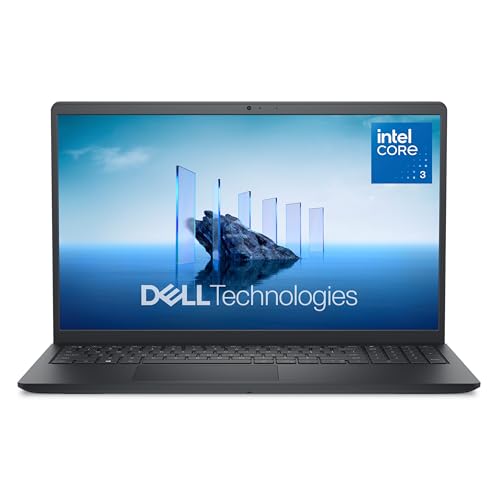
A 4.19 lb Dell 15 with 8 GB RAM, a 512GB drive and a numeric keypad, released in 2025.
Best for: a main home laptop that has to store years of files and photos Skip it if: you carry a laptop between rooms all day
This is the most expensive pick here and the only one with 512GB of storage. It is also the only listing that quantifies both storage and RAM: 512GB and 8 GB, with an Intel Core 3 100U processor and Windows 11 Home. The chassis measures 0.75 x 9.27 x 14.1 in and weighs 4.19 lb, so it is longer than the HPs but noticeably lighter. Dell publishes a 1-year basic onsite service warranty after remote diagnosis, which is the strongest support terms in this comparison.
The listing highlights a separate numeric keypad, a calculator hotkey, ComfortView blue-light software and lifted hinges for typing angle. For a best laptop for everyday use where "everyday" includes spreadsheets and long typing sessions, the numeric keypad and hinge design are genuine differentiators. The Carbon Black finish is the only colour listed.
Its trade against the rest of the set is footprint. The 14.1 in length makes it the largest desk presence in this comparison, and that is the price of the bigger screen, the numeric keypad and the 512GB drive.
Pros:
- 512GB SSD, four times the HP capacity
- 8 GB RAM listed
- 1-year basic onsite service warranty
- Separate numeric keypad and calculator hotkey
- Lifted hinge for typing angle
Cons:
- The most expensive pick here
- 14.1 in length makes it the largest desk footprint
- Only one colour listed
4. Lenovo IdeaPad Slim 3i — Most versatile
A 15.6-inch FHD Lenovo with a fingerprint power button, USB-C, HDMI and multiple USB-A ports.

Best for: students who need HDMI, USB-C and USB-A without adapters Skip it if: you need a published battery figure before you buy
Lenovo's IdeaPad Slim 3i is the port story of this comparison. The listing calls out full-function USB-C, HDMI, multiple USB-A ports and Wi-Fi 6, and it puts a fingerprint reader in the power button. The chassis measures 0.7 x 14.2 x 9.25 in in Gray, and the listing describes the machine as up to 10% slimmer than the previous generation. Lenovo pairs an Intel N100 with 4GB LPDDR5 memory and a 128GB SSD, and Microsoft Office is included in the listing description.
Two things sit against it. The listing publishes no weight figure, so the reader cannot compare it to the 3.41 lb KINOBUC or the 4.19 lb Dell on carry. And the Rapid Charge Boost claim of "up to 2 hours of battery life with just a 15-minute charge" is a top-up figure, not a total runtime, so it does not tell you how long a full charge lasts.
Its trade against the set is real: the widest port selection in this comparison, but the least complete specification sheet.
Pros:
- Fingerprint reader in the power button
- USB-C, HDMI and multiple USB-A ports
- Wi-Fi 6 listed
- Microsoft Office included per the listing
- Slim 0.7 in chassis
Cons:
- No published weight
- No published warranty
- 4GB LPDDR5 memory ceiling
- 128GB SSD same as the HPs
5. KINOBUC Laptop Computer 15.6 inch — Best budget pick
The cheapest and lightest pick here at 3.41 lb, with 8GB RAM and a 256GB SSD the listing says is expandable.

Best for: a light second laptop for travel, note-taking and web use Skip it if: you want the reassurance of a well-known brand
The KINOBUC is the cheapest of the five and the only one below 4 lb. At 3.41 lb and 0.6 x 14.1 x 9.3 in, it is easier to carry than any HP here, and it is the only pick in the entry band that pairs 8GB RAM with a 256GB SSD in the listing. KINOBUC says the storage is expandable to 1TB, which would double the Dell's headroom, and the 15.6 in FHD IPS display is quantified at 1920 by 1080. The listing describes dual Type-C ports, multiple USB-A ports, HDMI and TF card support, and a 1-year manufacturer warranty is published.
The reason it lands last, not first, is name recognition and sales momentum. This is the slowest-moving pick in the set by a wide margin, and the processor listed is a Pentium Gold 6500Y with 4 threads. That is enough for browsing, documents and video calls, and it is not the modern chip the HPs and the Dell offer.
Its trade against the set is straightforward: the best specification-to-price ratio here, from the least-known brand.
Pros:
- The cheapest pick here
- The lightest at 3.41 lb
- 8GB RAM and 256GB SSD listed
- 1-year manufacturer warranty
- Storage expandable to 1TB per the listing
Cons:
- Slowest-moving listing in the set
- Pentium Gold 6500Y is an older processor
- Least-known brand of the five
How much storage does everyday use really need?
Everyday use is deceptive because it feels light day to day and heavy over a year. Windows 11 and Microsoft 365 together take a real chunk of a 128GB SSD before you save a single document. Add a few years of downloads, a working folder of photos from your phone, and a couple of installed apps, and 128GB is uncomfortable within eighteen months.
Rough guidance from the listings in this set:
- 128GB (the two HPs and the Lenovo) suits a single user who keeps photos in the cloud and rarely installs applications.
- 256GB (the KINOBUC) suits a user who keeps a modest local photo library and one or two heavier applications.
- 512GB (the Dell) suits a household or a long-life main machine that will store years of files.
If in doubt, buy more storage than you think you need. Upgrading later is not always an option, and the KINOBUC is the only listing in this set that mentions expansion.
Is a 15-inch screen too big for daily carry?
The two HP picks measure 12.7 by 8.8 in, and the KINOBUC, Lenovo and Dell all sit around a 15.6 in class chassis at roughly 14 in wide. That difference is the size of a small book on your desk and in your bag.
For a laptop for everyday use that mostly stays home, the 15.6 in machines give you a bigger workspace and, in the Dell's case, a full numeric keypad. For a laptop that moves between rooms, a café or a classroom, the 12.7 in HPs or the 3.41 lb KINOBUC feel very different from the 4.19 lb Dell. Weight matters more than the screen size number on the box, because a lighter 15.6 in machine can still be easier to carry than a heavier 12.7 in one, and the KINOBUC is the pick that proves it here.
What the listings do not tell you
Three things worth watching for at checkout, because the listings in this set do not cover them consistently:
- Battery life in hours. Only the HP Everyday listing gives a runtime figure, and even that is a video-playback number, not a mixed-use estimate. Lenovo quotes a fast-charge top-up rather than a total. The Dell mentions Express Charge without hours.
- Screen brightness in nits. None of the five listings quantify it. For outdoor or bright-room use, this is the specification you cannot recover from the marketing text.
- Keyboard backlighting. Not mentioned on any of the five. If you type at night, confirm it at the listing before you buy.
None of these are dealbreakers for the best laptop for everyday use. They are the gaps that a careful buyer closes on the product page or in the questions section before pressing buy.
The verdict
If you want the best laptop for everyday use for a single person doing email, browsing, documents and video calls, the HP New Everyday Slim is the right pick. It is the second-cheapest in this set, it uses DDR5 memory, it comes with Windows 11 and Copilot AI preloaded, and it is the pick buyers reach for most often here. The 5 lb, 0.7 in chassis is compact enough for the sofa and light enough for the kitchen table.
If your everyday use includes storing years of photos, keeping a working set of files locally, or living on spreadsheets with a numeric keypad, the Dell 15.6 is the better buy. Four times the storage, 8 GB of listed RAM, a published onsite warranty and a 4.19 lb weight that is lighter than either HP make it the right choice when the machine has to last.
The cutoff between them is storage. Under 200GB of files, the HP is enough. Over that, the Dell earns the price step. If neither budget nor brand loyalty applies and carry matters most, the 3.41 lb KINOBUC is the lightest option here.
FAQ
Is 4GB of RAM enough for everyday use?
4GB of RAM is enough for light everyday use: one browser with a handful of tabs, a document open, and email in the background. It gets tight quickly with a video call layered on top, or with a photo editor open alongside a browser. The HP Everyday and the Lenovo IdeaPad Slim 3i list 4GB. The Dell and the KINOBUC list 8GB, which is the more comfortable everyday floor.
Is a Windows 11 laptop worth it over a Chromebook for daily tasks?
A Windows 11 laptop is worth it over a Chromebook when you need desktop applications, offline work or Microsoft 365. Every pick here runs Windows 11, and the HP Everyday and Lenovo IdeaPad Slim 3i listings mention Office or Microsoft 365 in the description. If your daily tasks are entirely browser-based, a Chromebook can do the same work more cheaply, so the answer depends on your software.
How does the HP New Everyday Slim compare to the Dell 15.6?
The HP New Everyday Slim compares to the Dell 15.6 on two axes that split them cleanly. The HP is the second-cheapest here, weighs 5 lb, measures 0.7 x 12.7 x 8.8 in and offers 128GB of storage. The Dell weighs 4.19 lb, measures 0.75 x 9.27 x 14.1 in, offers 512GB of storage with 8 GB RAM listed, and publishes a 1-year onsite warranty. Storage is the deciding factor.
What size SSD should a laptop for everyday use have?
The SSD size a laptop for everyday use should have depends on where your files live. If you use cloud storage for photos and documents, 128GB works, matching the two HPs and the Lenovo. If you keep files locally, 256GB (the KINOBUC) is a better floor, and 512GB (the Dell) is the safer long-term choice. Storage cannot always be upgraded later, so buy more than you expect to need.
What is the biggest mistake buyers make with everyday laptops?
The biggest mistake buyers make with everyday laptops is overpaying for processor headroom while underpaying for storage. Every pick here runs Windows 11 comfortably for browsing, email and documents. What separates them a year in is whether the SSD is still half full or full. Compare storage first, RAM second, weight third, and only then look at processor names on the listing.
If you have narrowed it down to one machine and you are still unsure, start with the HP New Everyday Slim and add a small external SSD later if you outgrow the 128GB drive. That is a cheaper path than paying up front for storage you may never fill. If you already know you will fill it, the Dell 15.6 is the honest answer, and the numeric keypad and onsite warranty make it feel less like a stretch and more like a decade-long machine. The KINOBUC sits behind both as the lightest option here and the one to consider if daily carry is the whole point of buying a laptop at all.