Best Wireless Printers: HP DeskJet 2955 Leads

A working developer prints less than they think, and prints it at the worst possible moment. Seven wireless printers ranked on the specs that decide whether that moment goes smoothly: tray capacity, duplex, warranty length and connection type.

By Samuel HarrisUpdated 18 min read
On this page
- Best wireless printer for programmers at a glance
- What does a programmer actually print?
- How I screened these seven listings
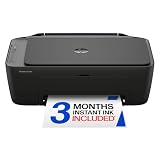
- 1. HP DeskJet 2955 Wireless All-in-One Color Inkjet Printer — Best overall
- 2. Brother DCP-L2640DW Wireless Compact Monochrome — Best premium
- 3. HP OfficeJet Pro 8125 Wireless All-in-One Color Inkjet — Best upgrade
- 4. Canon PIXMA TS6520 Wireless Color Inkjet Printer Duplex — Best warranty
- 5. Brother MFCJ1360DW Work Smart 1360 Wireless Color Inkjet — Best minimal setup
- 6. Epson EcoTank ET-4800 Wireless All-in-One Cartridge-Free — Best for pros
- 7. Rongta Thermal Portable Printers Wireless for Travel — Best budget pick
- Duplex, ADF and tray size: which one matters?
- Ink, toner or no ink at all?
- When a different pick wins
- What the listings leave out
- The verdict
- FAQ
The best wireless printer for programmers is the HP DeskJet 2955, a 7.55 lb all-in-one that fits on a crowded desk and handles the handful of pages a developer prints in a month. If you print long documents rather than single pages, the Brother DCP-L2640DW is the better buy, with a claimed 36 ppm and a 25 lb monochrome laser body to match. Get this wrong and you buy a machine sized for an office that runs dry between uses, or a tiny one that chokes on a 40-page contract.
Best wireless printer for programmers at a glance
| Pick | Input tray | Duplex / ADF | Price |
|---|---|---|---|
Best overall HP DeskJet 2955 |
60 sheets | Neither listed | Check Price |
Best premium Brother DCP-L2640DW |
Not listed | Duplex | Check Price |
Best upgrade HP OfficeJet Pro 8125 |
225 sheets | Duplex + ADF | Check Price |
Best warranty Canon PIXMA TS6520 |
Not listed | Duplex | Check Price |
Best minimal setup Brother MFCJ1360DW |
150 sheets | Duplex + 20-sheet ADF | Check Price |
Best for pros Epson EcoTank ET-4800 |
Not listed | ADF | Check Price |
Best budget pick Rongta F11A |
Thermal roll | Neither | Check Price |


What does a programmer actually print?
Almost nothing, most weeks. Then a lease, a signed offer letter, a shipping label, a printed diff for a code review someone insists on doing on paper. That pattern is the whole problem, and it's why the best wireless printer for programmers is not the same machine you'd buy for a small print shop.
The devices in this set split cleanly by what they assume about your volume:
- Low volume, small footprint. The HP DeskJet 2955 at 7.55 lb with a 60-sheet tray. The Rongta F11A at 0.95 lb with no paper tray at all.
- Mid volume, full features. The Brother MFCJ1360DW with a 150-sheet tray and a 20-sheet automatic document feeder. The Canon PIXMA TS6520 at 15.3 lb.
- High volume, office assumptions. The HP OfficeJet Pro 8125 with a 225-sheet tray. The Brother DCP-L2640DW at 25 lb. The Epson EcoTank ET-4800 with refillable tanks.
The trap is buying from group three because the specification sheet looks better. A 225-sheet tray is genuinely useful if you feed it. If you print eight pages a quarter, the extra tray depth is dead volume on your desk.
None of these listings claims anything specific to software work. Amazon's results for this search return general home and small-office machines, so treat "for programmers" as your own constraint rather than a feature any manufacturer here has built for. What you can check is size, weight, tray capacity, duplex, feeder and warranty. Those are the numbers this guide ranks on.
How I screened these seven listings
I lined up the published specifications for all seven side by side and cut anything I couldn't verify from the listing itself. Print speed claims are the manufacturer's; tray sizes, weights, dimensions and warranty lengths are printed figures I can compare.
Four screens did the work:
- Footprint. Desk depth is the constraint nobody measures until the box arrives. Depths here run from 6.06 in on the DeskJet 2955 to 12.5 in on the DCP-L2640DW.
- Paper handling. Duplex and an automatic document feeder separate a machine that scans a stack from one you feed a page at a time.
- Published warranty. Six of seven state a single year. The Canon PIXMA TS6520 is the only one publishing three.
- Connection type. Two picks state Ethernet: the DCP-L2640DW and the EcoTank ET-4800. Two state dual-band Wi-Fi covering 2.4GHz and 5GHz. The Rongta connects over Bluetooth only, and its own listing warns it can't pair directly from a phone.
What that screening surfaced is that the deciding specification isn't print speed. It's whether the machine can move paper without you standing over it, and whether it fits where you have space.
1. HP DeskJet 2955 Wireless All-in-One Color Inkjet Printer — Best overall
The DeskJet 2955 wins because 7.55 lb and a 6.06 in depth make it the only pick here you can genuinely tuck beside a monitor stand and forget about.
Best for: light, occasional printing from a desk with no room to spare Skip it if: you print double-sided or in long batches
At 6.06 x 12 x 16.7 in it is the shallowest machine in this group by a clear margin, and at 7.55 lb it weighs less than half what the Brother DCP-L2640DW does. That matters for the reader this guide is written for. A printer you use twice a month should not own a third of your desk.
It sells faster than every other pick here, and only two sellers list it. HP states a 60-sheet input tray, colour print, copy and scan, and mobile printing. Claimed speed is up to 7.5 ppm black and 5.5 ppm colour, which is the slowest set of numbers in this roundup. HP also claims an AI feature that strips unwanted content from web pages and emails before printing, useful if you print documentation pages.
The control panel is an icon LCD, not a touchscreen. There's no duplex listed and no automatic document feeder, so double-sided output means flipping sheets and scanning a stack means lifting the lid seven times. The trade-off is deliberate: you give up paper automation to get the smallest body here, and for low-volume printing that's the right side of the deal.
Pros:
- Lightest full-sheet pick at 7.55 lb
- Shallowest body in the set at 6.06 in
- 60-sheet input tray for occasional runs
- Colour print, copy and scan in one unit
- The one buyers choose most often here
Cons:
- Slowest claimed speeds at 7.5 ppm black
- No duplex printing listed
- No automatic document feeder
- Icon LCD only, no touchscreen
- One-year limited warranty against Canon's three
2. Brother DCP-L2640DW Wireless Compact Monochrome — Best premium
This is the pick for anyone whose printing arrives in 40-page bursts, because a claimed 36 ppm and toner instead of ink change what a long job feels like.

Best for: anyone printing long documents where speed matters Skip it if: you need colour output
Brother claims up to 36 ppm and scan speeds up to 23.6 ipm mono and 7.9 ipm colour. That top figure is roughly five times the DeskJet's claimed black-and-white rate. It's the most expensive pick here, and it's a laser rather than an inkjet, which is the real distinction: toner doesn't dry out between jobs.
That's the specification most guides bury, and for someone who prints in unpredictable clumps it's the one that decides the purchase. Brother lists duplex printing, dual-band wireless across 2.4GHz and 5GHz, plus Ethernet, and Alexa compatibility. Only one seller lists it. A Refresh subscription trial is included per the listing.
The costs are physical and chromatic. At 25 lb and 12.5 x 15.7 x 16.1 in it's the heaviest and deepest machine here, twice the depth of the DeskJet. And it prints black and white only, so any colour chart, photo or highlighted diff is out. Brother also pushes you toward its own TN830 toner in the listing copy, which narrows your consumables options later.
Pros:
- Fastest claimed output at up to 36 ppm
- Laser toner, no drying between jobs
- Ethernet plus dual-band 2.4GHz and 5GHz wireless
- Automatic duplex printing
- Scan speeds claimed up to 23.6 ipm mono
Cons:
- Monochrome only, no colour printing
- Heaviest pick at 25 lb
- Deepest body here at 12.5 in
- Highest price position in the set
- Listing steers you to Brother-brand toner
3. HP OfficeJet Pro 8125 Wireless All-in-One Color Inkjet — Best upgrade
The 225-sheet tray is nearly four times the DeskJet's, which makes this the pick if you refill paper more often than you'd like.

Best for: a home office that prints in batches and scans stacks Skip it if: desk space is tight
This is the most feature-complete inkjet in the roundup. HP lists fast colour printing, scan, copy, automatic two-sided printing, an automatic document feeder and a 225-sheet input tray. No other pick here publishes a tray figure above 150 sheets. The 2.7-inch colour touchscreen is the largest display in the set, and HP describes the interface as phone-like.
Connectivity is dual-band Wi-Fi, which HP claims detects and resolves connection issues on its own. Two sellers list it. A three-month Instant Ink trial is included, and HP is upfront that a monthly fee follows unless you cancel, so factor the subscription into your thinking rather than treating it as free capacity.
The price position is the highest of the two premium inkjets here, and the body is 9.17 x 13.3 x 18.1 in at 17.6 lb. That's the tallest footprint in the group. Warranty is one year limited, so you pay more than the Canon and get a third of its published coverage. It also sells more slowly than any other pick except the Rongta, which tells you something about how many buyers actually need 225 sheets at home.
Pros:
- Largest input tray here at 225 sheets
- Duplex and automatic document feeder both included
- 2.7-inch colour touchscreen, biggest display in the set
- Dual-band Wi-Fi with self-resolving connection claim
- Fax and mobile printing via the HP app
Cons:
- Tallest body at 9.17 in high
- Ink subscription carries a monthly fee after three months
- One-year warranty despite premium positioning
- Slowest seller of the six full-sheet picks
- Heavier than every pick except the Brother laser
4. Canon PIXMA TS6520 Wireless Color Inkjet Printer Duplex — Best warranty
Three years of manufacturer coverage against everyone else's one is the clearest single advantage in this entire set.

Best for: someone who wants the longest published coverage here Skip it if: you need to feed a stack into a scanner
Six of the seven printers in this roundup publish a one-year warranty. The PIXMA TS6520 publishes three. For a machine that sits idle for weeks at a time, that gap is worth more than a spec-sheet point, because idle inkjets are exactly the ones that develop problems in year two.
It's also the second-cheapest pick here and the second-fastest seller in the set. Canon lists duplex printing, a 2-cartridge hybrid ink system it claims delivers sharp text and vivid colour, dual-band Wi-Fi across 2.4GHz and 5GHz, and an integrated flatbed scanner for copying. Weight is 15.3 lb in a 6.7 x 14.8 x 14 in body, so it's shallower front-to-back than the two Brothers.
What it doesn't list is an automatic document feeder, which the OfficeJet Pro 8125 and the MFCJ1360DW both have. No input tray capacity is published either, so you're buying without knowing how often you'll top up paper. Only one seller stocks it. Canon's listing also leans on the phrase "budget-friendly", which sets expectations about build you should weigh against that long warranty.
Pros:
- Only three-year published warranty in this set
- Second-cheapest of the seven picks
- Automatic duplex printing included
- Dual-band 2.4GHz and 5GHz Wi-Fi
- Shallower footprint than either Brother
Cons:
- No automatic document feeder listed
- Input tray capacity not published
- Only one seller lists it
- Heavier than the DeskJet by nearly 8 lb
5. Brother MFCJ1360DW Work Smart 1360 Wireless Color Inkjet — Best minimal setup
Cloud printing straight from the panel means you can push a document from Google Drive without opening a laptop.

Best for: cloud-first workflows and fast onboarding Skip it if: you want a large touchscreen
Brother lists print and scan connections to Google Drive, Dropbox, Box and OneDrive directly from the printer's 1.8-inch colour display. If your documents live in cloud storage rather than on a local disk, that removes a step every single time. It's the only pick in this set naming specific cloud services in its feature list.
The paper handling is genuinely good for the price position. Automatic duplex, a 20-sheet single-sided automatic document feeder and a 150-sheet paper tray, all inside a 7.2 x 13.5 x 15.4 in body at 16.8 lb. That's the second-largest published tray here behind the OfficeJet Pro, in a machine that's the third-cheapest of the seven. USB is offered alongside wireless, useful if your router sits two floors away.
The 1.8-inch display is small, less than three-quarters the size of the OfficeJet's 2.7-inch screen, and menu navigation on it is slower. The document feeder is single-sided only, so scanning a two-sided contract means two passes. Warranty is one year limited. And at 16.8 lb it's heavier than the Canon while giving up two years of coverage.
Pros:
- Direct print and scan to Google Drive, Dropbox, OneDrive
- 150-sheet tray plus 20-sheet automatic document feeder
- Automatic duplex printing
- USB and wireless connection options
- Third-cheapest pick in this set
Cons:
- 1.8-inch display is the smallest colour screen here
- Document feeder is single-sided only
- One-year limited warranty
- Heavier than the Canon at 16.8 lb
6. Epson EcoTank ET-4800 Wireless All-in-One Cartridge-Free — Best for pros
Refillable ink tanks instead of cartridges is the only pick here that changes how consumables work rather than how fast paper moves.

Best for: high-volume printing and a wired network drop Skip it if: you print a page a week
Epson's pitch is high-capacity tanks filled from EcoFit bottles, with no cartridges at all. For a heavy printing habit that's a structural change rather than a feature. It's also one of only two picks in this roundup listing Ethernet, alongside the Brother laser, so it can sit on a wired drop next to your switch instead of competing for Wi-Fi.
At 11 lb and 6.7 x 11.8 x 14.8 in it's the second-lightest and second-shallowest full-sheet machine here, behind only the DeskJet 2955. Epson lists a flatbed scanner, copier, fax and an automatic document feeder, plus a colour display. The Micro Piezo heat-free printing technology is Epson's claim for sharp text on varied paper types. Only one seller lists it, and it's the oldest design in the set at a 2022 release.
The catch is that tank printers reward volume. Fill the tanks, print rarely, and you've paid a premium price position for capacity you never consume. No duplex is listed, so double-sided output is manual. No input tray figure is published either. Warranty is one year limited, matching the field rather than beating it.
Pros:
- Cartridge-free refillable ink tanks
- Ethernet alongside wireless connectivity
- Second-lightest full-sheet pick at 11 lb
- Automatic document feeder and fax included
- Shallow 6.7 in body depth
Cons:
- No duplex printing listed
- Premium price position for infrequent printing
- Oldest design here, released 2022
- Input tray capacity not published
- Only one seller stocks it
7. Rongta Thermal Portable Printers Wireless for Travel — Best budget pick
At 0.95 lb this fits in a laptop bag, which is a completely different job from anything else in this set.

Best for: printing receipts and short notes away from a desk Skip it if: you need standard sheets of paper
This is the cheapest of the seven and the lightest by a factor of eleven against the OfficeJet Pro. Dimensions are 2.28 x 10.2 x 1.18 in, roughly the size of a long ruler. Rongta claims 203 DPI resolution and an 8.5-inch print width, with Bluetooth pairing to Android and iOS through the RONGTA app.
It's inkless, which is the real appeal. Thermal printing means nothing to dry out, nothing to replace but paper. If you want a machine for jotting notes, labels or short receipts at a co-working desk, this does that job and no other pick here comes close on size.
Now the limits, and they're substantial. Rongta's own listing states it does not support Chrome, and that Bluetooth pairing cannot be done directly from a phone or tablet, only through the app. Thermal output fades over time, so it's unsuitable for anything you'll keep. There's no scanner, no copier, no duplex and no paper tray. It's also the slowest seller in this roundup. Treat it as a companion device rather than the printer you print a signed contract on.
Pros:
- Cheapest pick in this set
- Lightest at 0.95 lb, genuinely portable
- Inkless thermal printing, no cartridges
- Claimed 203 DPI and 8.5-inch print width
Cons:
- No Chrome support per Rongta's listing
- Bluetooth pairing only works through the app
- No scanner, copier or duplex
- Thermal prints fade and aren't archival
- Slowest seller of all seven picks
Duplex, ADF and tray size: which one matters?
Three paper-handling features get thrown around and they solve entirely different problems. Duplex prints on both sides automatically. An automatic document feeder pulls a stack through the scanner without you lifting the lid. Tray capacity is how many blank sheets sit waiting.
Here's how this set divides:
- Duplex and ADF both: OfficeJet Pro 8125, MFCJ1360DW
- Duplex only: DCP-L2640DW, PIXMA TS6520
- ADF only: EcoTank ET-4800
- Neither: DeskJet 2955, Rongta F11A
For a developer, the honest ranking is ADF first, duplex second, tray last. Scanning is what you do with paper you receive: signed forms, receipts for expenses, a marked-up printout someone handed you. Feeding twelve pages one at a time onto a flatbed is the single most tedious thing a printer asks of you.
Duplex matters if you print long documents and care about paper. Tray capacity is the specification most people over-weight. A 60-sheet tray refilled twice a year is not a problem. A 225-sheet tray on a machine you use monthly is capacity you're storing, not using.
Ink, toner or no ink at all?
The consumable model is the specification that separates these three groups, and it's where the best wireless printer for programmers question gets genuinely interesting. Occasional printing punishes cartridges more than any other usage pattern.
Cartridge inkjets cover the DeskJet 2955, PIXMA TS6520, OfficeJet Pro 8125 and MFCJ1360DW. Canon states a 2-cartridge hybrid system. The two HP units include a three-month Instant Ink trial, with HP noting a monthly fee applies afterwards.
Tank inkjet is the EcoTank ET-4800 alone. Epson lists high-capacity tanks refilled from EcoFit bottles, with no cartridges and, per its listing, zero cartridge waste.
Toner laser is the DCP-L2640DW. Brother directs buyers toward TN830 or TN830XL replacements.
Thermal is the Rongta F11A, which uses no ink whatsoever.
Toner is the most forgiving of a stop-start printing habit. Tanks reward the opposite pattern, high and steady volume. Cartridges are cheapest to buy into and the least tolerant of long gaps. Match the model to how you actually print, not how you intend to.
When a different pick wins
The DeskJet 2955 is the default, but four conditions flip it cleanly.
- You print documents over 20 pages. Go to the DCP-L2640DW. Up to 36 ppm claimed against 7.5 ppm changes a coffee break into a moment.
- You scan more than you print. The OfficeJet Pro 8125 or the MFCJ1360DW. Both list an ADF; the Brother's is a 20-sheet single-sided unit.
- You want the longest published coverage. The PIXMA TS6520 at three years, against one year everywhere else in this set.
- You need a wired connection. The DCP-L2640DW or the EcoTank ET-4800 are the only two listing Ethernet.
One threshold to hold onto: 12 inches of desk depth. The DeskJet needs 6.06 in, the EcoTank 6.7 in, the PIXMA 6.7 in. The DCP-L2640DW needs 12.5 in. If your desk is against a wall with a monitor arm in the way, that number eliminates picks before any other spec does.
What the listings leave out
Reading seven listings side by side, the gaps are as informative as the figures. Three of these seven publish no input tray capacity at all: the PIXMA TS6520, the DCP-L2640DW and the EcoTank ET-4800. You'd be buying paper capacity blind on all three.
Nobody publishes a duty cycle, so there's no stated monthly page volume for any machine here. Nobody publishes noise levels, which matters more than you'd think when a printer sits three feet from where you take calls. Print speeds are all manufacturer claims measured under conditions nobody discloses.
Driver and operating system support is thin too. The Rongta listing is the only one that explicitly names a compatibility limit, and it's a warning: no Chrome support. If you work on Linux, none of these seven listings states anything about it either way, so check the manufacturer's own support pages before committing. That's the one piece of homework this roundup can't do for you, and for a developer it's often the deciding factor.
Warranty coverage is the field where the data is complete, and it's lopsided. Six say one year. One says three.
The verdict
The HP DeskJet 2955 is the winner because it's built for the printing volume a programmer actually has, not the volume a spec sheet implies. At 7.55 lb and 6.06 in deep it's the smallest full-sheet machine here, it prints and scans in colour, and it has a 60-sheet tray that will outlast most months. It also sells faster than anything else in this set, which suggests plenty of other people reached the same conclusion about size versus features.
Two conditions flip that recommendation. First, volume: if your printing arrives in 40-page bursts, the Brother DCP-L2640DW's claimed 36 ppm is roughly five times the DeskJet's black-and-white rate, and toner won't dry out during the quiet weeks between jobs. That's its exact advantage, and it's a real one. Second, warranty: the Canon PIXMA TS6520 publishes three years of manufacturer coverage while every other pick here publishes one, and it's the second-cheapest of the seven. If you'd rather have longevity insurance than a smaller footprint, take the Canon.
The Rongta F11A sits outside that comparison entirely. It's a 0.95 lb thermal companion device, not a replacement for a sheet-fed printer.
FAQ
Is a wireless printer for programmers worth buying at all?
A wireless printer for programmers is worth buying if you've ever needed a signed document at short notice. That's the whole case. Between those moments the machine does nothing, which is why footprint and warranty matter more than speed. The DeskJet 2955 at 7.55 lb costs you almost no desk space during the long idle stretches.
Which is better value, the DeskJet 2955 or the PIXMA TS6520?
Better value between the DeskJet 2955 and the PIXMA TS6520 depends on what you're protecting against. The Canon is the second-cheapest here, adds automatic duplex and publishes a three-year warranty against HP's one year. The HP is smaller at 7.55 lb versus 15.3 lb and shallower at 6.06 in. Choose Canon for coverage, HP for desk space.
Do any of these printers support Ethernet as well as Wi-Fi?
Two of these printers support Ethernet as well as wireless: the Brother DCP-L2640DW and the Epson EcoTank ET-4800. Brother also lists dual-band coverage across 2.4GHz and 5GHz on that model. If your router is far from your desk or your Wi-Fi is congested, a wired drop removes the most common source of printing frustration entirely.
What's the difference between the OfficeJet Pro 8125 and the MFCJ1360DW?
The difference between the OfficeJet Pro 8125 and the MFCJ1360DW comes down to scale. HP lists a 225-sheet tray and a 2.7-inch touchscreen; Brother lists a 150-sheet tray, a 20-sheet single-sided feeder and a 1.8-inch display. Brother connects directly to Google Drive, Dropbox and OneDrive. Brother is also the cheaper of the two.
What mistake do people make choosing a home office printer?
The most common mistake choosing a home office printer is buying tray capacity and print speed you'll never use, then discovering the machine doesn't fit the desk. Measure your available depth first. Depths in this set range from 6.06 in to 12.5 in. Then decide whether you scan stacks, because an automatic document feeder saves more time than any speed figure.
Start with your tape measure, not your browser. Check the depth of the space where the printer will actually live, then work out whether you scan stacks of paper or just print the occasional page. That answer picks your machine in about a minute. For most developers, the DeskJet 2955 is the right default precisely because it asks so little: 7.55 lb, 6.06 in deep, colour print and scan, and no ongoing attention between the rare weeks you need it. Buy the smallest machine that does the job you actually have.