Best RGB Gaming Laptops for Colour-Critical Design Work

Six gaming laptops compared on the specs that matter to design work: panel resolution, colour gamut claims, memory, storage and carry weight. The ASUS ROG Strix G16 takes the top spot, but two picks beat it on screen.

By Samuel HarrisUpdated 17 min read
On this page
- Best RGB gaming laptop for graphic designers at a glance
- How I screened these six and what the weights were
- Does RGB lighting matter for design work at all?
- Which panel here is good enough for colour work?
- 1. ASUS ROG Strix G16 — Best overall
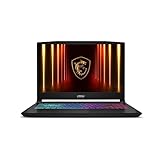
- 2. msi Katana 15 HX — Best premium
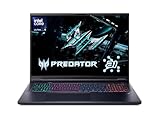
- 3. Acer Predator Helios Neo 18 — Best for families
- 4. GIGABYTE Gaming A16 — Best warranty
- 5. NIMO 15.6" IPS FHD — Most versatile
- 6. CHIFUYOU Gaming Laptop 2026 — Best budget pick
- Memory, storage and the two specs that age worst
- What extra money actually buys across these six
- When a different pick wins
- The verdict
- FAQ
The best RGB gaming laptop for graphic designers is the ASUS ROG Strix G16, because it pairs a 165Hz FHD+ 16:10 panel with an RTX 5060 and a 360° RGB light bar that switches off entirely in Stealth Mode. If your work lives or dies on colour accuracy, the MSI Katana 15 HX is the better buy: its listing claims a QHD+ panel at 100% DCI-P3. Most buyers compare GPU tiers here. That's the wrong yardstick for design work, and it's why so many designers end up with a fast machine and a screen they don't trust.
Best RGB gaming laptop for graphic designers at a glance
| Pick | Display | Memory / storage | Price |
|---|---|---|---|
Best overall ASUS ROG Strix G16 |
16" FHD+ 16:10 165Hz |
16GB DDR5 1TB Gen 4 SSD |
Check Price |
Best premium msi Katana 15 HX |
15.6" QHD+ 165Hz, 100% DCI-P3 claim |
32GB DDR5 1TB NVMe SSD |
Check Price |
Best for families Acer Predator Helios Neo 18 |
18" WQXGA 16:10 240Hz, 100% DCI-P3 claim |
32GB DDR5 2TB Gen 4 SSD |
Check Price |
Best warranty GIGABYTE Gaming A16 |
16" 1920x1200 WUXGA 165Hz |
16GB DDR5 1TB SSD |
Check Price |
Most versatile NIMO 15.6" IPS FHD |
15.6" IPS FHD 1920x1080 |
16GB DDR5 512GB SSD |
Check Price |
Best budget pick CHIFUYOU Gaming Laptop 2026 |
15.6" Full HD 1920x1080 |
16GB RAM 512GB SSD |
Check Price |



How I screened these six and what the weights were
I weighted four things, in this order, and the order is deliberate.
- Panel specification, 40%. Resolution, aspect ratio and any published colour-gamut claim. A designer stares at the screen all day. Everything else is downstream.
- Memory and storage, 25%. Layered files, 4K assets and a browser full of references eat RAM. 16GB is workable, 32GB is comfortable.
- GPU and CPU class, 20%. Discrete graphics accelerate real work in Illustrator, After Effects and any 3D pipeline. It matters, but less than the panel.
- Portability and support, 15%. Weight in pounds, published dimensions, stated warranty length.
Why that weighting? Because a GPU you outgrow in three years is annoying, and a panel you can't trust is a problem on day one. Nobody re-exports a job because their frame rate was low. Plenty of designers re-export because the colour looked different on the client's screen.
Two of the six here are not really design machines by the standards above, and I've said so plainly in their sections. They earned a place because they answer a different question: what's the cheapest way into this category, and what's the lightest.
Does RGB lighting matter for design work at all?
RGB lighting matters for design work in one narrow, practical way: whether you can turn it off. That's it.
A colour-shifting keyboard throws light onto your hands, your desk and sometimes the bottom edge of the screen. When you're judging a subtle shift in a grey, ambient colour cast is noise. So the useful question isn't how many zones a keyboard has, it's whether the machine has a one-press way to go dark.
The ASUS ROG Strix G16 is the only pick here with a named answer. ASUS says Stealth Mode turns off all lighting, and the 360° light bar syncs with the keyboard when you do want it on. MSI describes a 4-zone RGB keyboard with highlighted WASD keys on the Katana 15 HX. The NIMO listing mentions a backlit keyboard rather than colour zones.
The rest is preference. If you take client calls at a coffee shop, a laptop pulsing purple reads differently than a plain black one. Stealth Mode solves that in a keystroke. Four-zone lighting usually means digging through software.
- Want lighting you can kill instantly: ASUS ROG Strix G16
- Want per-zone colour control: msi Katana 15 HX
- Don't care either way: buy on panel and memory instead
Which panel here is good enough for colour work?
This is the deciding criterion, and only two of these six publish a colour-gamut figure at all.
MSI states 100% DCI-P3 for the Katana 15 HX's QHD 165Hz display. Acer states up to 100% DCI-P3 for the Helios Neo 18's WQXGA panel at 240Hz. Both are manufacturer claims on the listing, not measurements, and "up to" is doing work in Acer's phrasing. Still, a stated gamut target beats no statement.
The other four say nothing about gamut. ASUS describes the Strix G16's 16-inch FHD+ 16:10 panel as having a new ACR film that enhances contrast and reduces glare, which is a claim about reflection, not colour. GIGABYTE lists 1920x1200 WUXGA at 165Hz. NIMO and CHIFUYOU both list 1920x1080.
Here's the practical cutoff. If your deliverables are print, packaging or video, treat a published DCI-P3 figure as a requirement and buy the Katana or the Helios. If your work is web, UI, social and presentation decks in sRGB, an FHD+ or WUXGA panel is fine and a hardware calibrator solves the rest for less than the price gap.
Aspect ratio is the underrated spec. Three picks here are 16:10 or better: the ASUS at 16 inches, the GIGABYTE at 1920x1200, the Acer at 18 inches. That extra vertical space is where your layers palette and timeline live.
1. ASUS ROG Strix G16 — Best overall
The Strix G16 is the pick that gets the balance right: a 16-inch 16:10 canvas, RTX 5060 graphics, and lighting you can shut off completely for a client meeting.
Best for: a designer who wants one machine for client work and games Skip it if: you grade photos or video against a printed proof
Of the six, this is the one buyers choose most often, and the specification sheet explains why. The 16-inch FHD+ display runs 16:10 at 165Hz with 3ms response, so you get vertical room for toolbars that a 16:9 panel doesn't give you. ASUS pairs an Intel Core i7-14650HX with an RTX 5060 built on the Blackwell architecture, and lists DLSS 4 and Max-Q support. Memory is 16GB of DDR5-5600MHz with a 1TB PCIe Gen 4 SSD.
It weighs 5.84 lb and measures 10.6 x 13.9 x 0.9 in, which is heavier than the MSI and the GIGABYTE. The trade-off is a bigger screen and a 360° light bar that ASUS says syncs with the keyboard and ROG peripherals, then vanishes in Stealth Mode. That last detail is the one that pushed it to the top for design use.
Against the field, it gives up raw specs to the Katana and the Helios. Both carry 32GB and both publish a gamut figure. The Strix publishes neither, and its FHD+ resolution is the lowest of the three big-panel picks. It's the best all-rounder here, not the best screen.
Pros:
- 16-inch 16:10 panel at 165Hz and 3ms
- Stealth Mode kills all RGB lighting at once
- RTX 5060 with DLSS 4 and Max-Q support
- 1TB PCIe Gen 4 SSD and DDR5-5600MHz memory
- The one buyers choose most often in this set
Cons:
- FHD+ resolution, lower than the QHD+ and WQXGA picks
- No published colour-gamut figure
- 5.84 lb is nearly 0.9 lb heavier than the Katana
- 16GB memory where two rivals ship 32GB
2. msi Katana 15 HX — Best premium
This is the best screen-per-pound pick of the six: a QHD+ 165Hz panel with a stated 100% DCI-P3 gamut in a 4.96 lb chassis.

Best for: designers who need a wide-gamut panel and heavy CPU headroom Skip it if: you need a large canvas or a light bag
The Katana is the most expensive pick here, and the money goes somewhere useful. MSI states the 15.6-inch QHD 165Hz display covers 100% DCI-P3, which is the only wide-gamut claim in this set attached to a non-18-inch machine. Behind it sits an Intel Core i9-14900HX, which MSI describes as a 24-core hybrid design, plus an RTX 5070 and 32GB of DDR5. Storage is a 1TB NVMe SSD.
At 4.96 lb and 10.3 x 14.1 x 0.99 in, it's the second-lightest of the four discrete-GPU picks. MSI lists Cooler Boost 5 with dual fans and a five-heat-pipe shared design, and a 4-zone RGB keyboard with highlighted WASD keys.
The compromise is canvas size. 15.6 inches at 16:9 gives you less vertical working room than the ASUS or the GIGABYTE, and no listed Stealth-style lighting kill switch. It sells slower than the ASUS and the Acer here too, so it's less of a default and more of a deliberate choice for people who care about gamut above everything.
Pros:
- QHD+ 165Hz panel with a 100% DCI-P3 claim
- 32GB DDR5 and a 1TB NVMe SSD
- Core i9-14900HX, the highest CPU tier here
- 4.96 lb, lightest of the discrete-GPU picks
- 4-zone RGB keyboard control
Cons:
- The most expensive pick in this set
- 15.6-inch 16:9 panel, less vertical room than the 16:10 picks
- No listed one-press lighting shutoff
- Slower seller than the ASUS and the Acer
3. Acer Predator Helios Neo 18 — Best for families
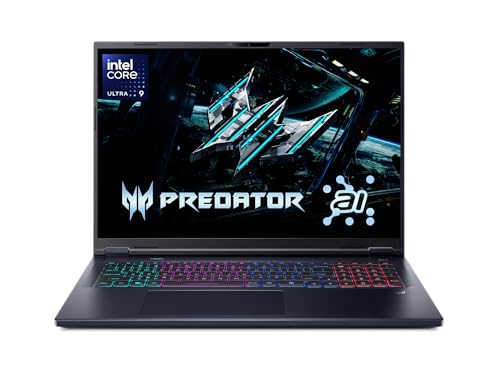
Eighteen inches of 16:10 WQXGA at 240Hz makes this the biggest working canvas here, and 2TB of storage means nobody has to delete anything.
Best for: a shared desk machine that doubles as a design workstation Skip it if: the laptop has to leave the house regularly
The Helios Neo 18 is the only pick that reads like a desktop replacement, and the numbers back that up. The 18-inch WQXGA screen runs 16:10 at 240Hz with 3ms response, and Acer states up to 100% DCI-P3 coverage. Inside is an Intel Core Ultra 9 275HX, which Acer rates at up to 13 NPU TOPS, alongside an RTX 5070 Ti, 32GB of DDR5 and a 2TB Gen 4 SSD. That's double the storage of every other pick here.
Warranty is the most detailed of the six: a one-year International Travelers Limited Warranty plus 24/7 access to a Predator-specialised support team. Connectivity is Killer Wi-Fi 6E, the only pick in this set that isn't Wi-Fi 7 or unspecified.
Then there's the weight. At 7.28 lb and 12.1 x 15.8 x 1.1 in, it's nearly twice the CHIFUYOU and 1.44 lb over the ASUS. Only one seller lists it. Treat it as furniture, not luggage. If it lives on a desk and multiple people use it for design, games and homework, the size stops being a flaw and starts being the point.
Pros:
- Largest canvas here at 18 inches, 16:10 WQXGA
- 240Hz refresh with 3ms response
- 2TB Gen 4 SSD, double every other pick
- Up to 100% DCI-P3 claim from Acer
- Warranty includes 24/7 Predator-specialised support
Cons:
- 7.28 lb, by far the heaviest of the six
- 1.1 in thick and 15.8 in wide, awkward in most bags
- Only one seller lists it
- Wi-Fi 6E where the ASUS lists Wi-Fi 7
4. GIGABYTE Gaming A16 — Best warranty
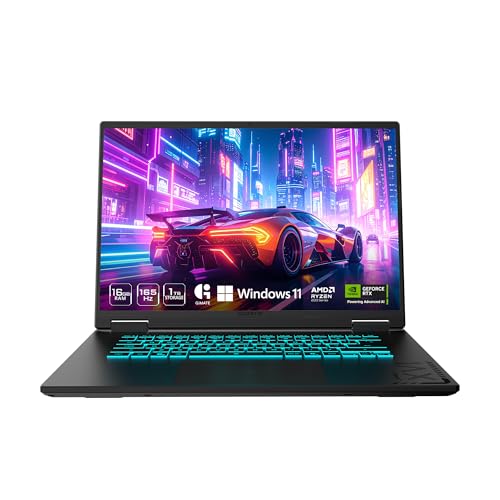
A 16-inch 1920x1200 panel and an RTX 5060 at mid-range money, with a 180-degree hinge that flattens for anyone reviewing work over your shoulder.
Best for: designers who want a 16-inch 16:10 canvas at mid-range money Skip it if: you want a QHD-class panel
The A16 undercuts the ASUS on price position while matching its 165Hz refresh and beating its resolution slightly: 1920x1200 WUXGA in a 16:10 shape, so the same extra vertical room without the higher spend. GIGABYTE pairs an AMD Ryzen 7 260 with an RTX 5060 on Blackwell, 16GB of DDR5 and a 1TB SSD.
Two design details stand out. The 180-degree hinge lays the screen flat, which is genuinely useful when you're turning a laptop toward a client across a table. And the chassis measures 19.45mm at its slimmest, with the machine weighing 4.85 lb across 10.3 x 14.1 x 0.9 in. That's a pound lighter than the ASUS for a similar-sized screen. GIGABYTE also bundles GiMATE, its AI assistant layer.
The catch is that it's the slowest seller of the six, and the listing publishes no gamut figure and no detail on keyboard lighting zones. Warranty is one year from the manufacturer, same as the ASUS and MSI. It wins its label on the strength of a plain, stated manufacturer term rather than a longer one, which tells you how thin the support field is here.
Pros:
- 1920x1200 WUXGA 16:10 panel at 165Hz
- 4.85 lb, a pound under the ASUS
- RTX 5060 and 1TB SSD at a mid-range price position
- 180-degree hinge for sharing the screen
- 19.45mm slim chassis
Cons:
- Slowest seller in this group of six
- No published colour-gamut figure
- No stated RGB zone control on the listing
- 16GB memory, half the Katana and Helios
5. NIMO 15.6" IPS FHD — Most versatile
The lightest machine here with a genuinely useful spec sheet: 3.75 lb, DDR5 memory, and RAM plus SSD you can swap yourself.

Best for: students and light layout work on the move Skip it if: you run 3D, video or heavy Illustrator files
The NIMO N153 is honest about what it is. AMD Ryzen 5 6600H with six cores up to 4.5GHz, integrated Radeon 660M graphics, 16GB of DDR5 and a 512GB SSD, in a 15.6-inch IPS FHD chassis that weighs 3.75 lb and measures 0.76 x 14.1 x 8.98 in. It's the second-cheapest pick here and the thinnest.
Two features matter for a designer on a budget. NIMO says both the RAM and the SSD can be swapped or upgraded, so a 512GB drive isn't a permanent ceiling. And it charges over a 100W Type-C adapter, meaning one brick can cover your laptop and your phone in a bag.
There's no discrete GPU, and that's the line. Radeon 660M handles InDesign layouts, Figma, photo edits and a lot of vector work. It won't handle After Effects renders or 3D scenes with any grace. The listing mentions a backlit keyboard rather than RGB zones, so if colour lighting is part of the appeal, this isn't the pick. The warranty is described only as coming from the manufacturer, with no stated term, which is the weakest support language in this set.
Pros:
- 3.75 lb and 0.76 in thick, the thinnest here
- User-upgradeable RAM and SSD
- DDR5 memory at an entry price position
- 100W USB-C charging
- Fingerprint sensor built into the touchpad
Cons:
- Integrated Radeon 660M graphics only
- 512GB SSD, smallest alongside the CHIFUYOU
- Backlit keyboard, not zoned RGB
- No stated warranty length on the listing
6. CHIFUYOU Gaming Laptop 2026 — Best budget pick
The cheapest way in and the longest stated warranty of the six, but the processor generation puts it outside serious design work.

Best for: a second machine for admin, email and invoicing Skip it if: design software is the reason you're buying
This is the cheapest of the six and the lightest at 3.5 lb, measuring 0.8 x 14 x 9 in. It ships with 16GB of RAM, a 512GB SSD, a 15.6-inch 1920x1080 display, and Windows 11 Pro with Office included. The support terms are the standout: a two-year warranty, a six-month free return window, 24/7 online support and 18-hour weekday English phone service. No other pick here states two years.
Now the part that decides it. The listed model is an Intel Core i7-7600U, a dual-core mobile part from an older generation, and the listing quotes speeds up to 3GHz. That is a business-notebook processor with integrated graphics, not a design chip. It'll run Office, a browser and light photo editing. Put a 200MB layered PSD in front of it and you'll feel every save.
I'd only recommend it as a companion machine: the thing you carry to a client meeting to show a deck and sign a contract, while the real work sits on one of the picks above. It's also the slowest seller of the six, and only one seller lists it. Calling it a gaming laptop is generous; calling it a cheap, well-supported Windows 11 Pro notebook is accurate.
Pros:
- Two-year stated warranty, longest here
- Six-month free return window
- 3.5 lb, lightest of the six
- Windows 11 Pro with Office included
- Cheapest pick in this set
Cons:
- Core i7-7600U is an older dual-core part
- No discrete graphics
- 512GB SSD and 1920x1080 panel
- Slowest seller of the six, with a single seller listing it
Memory, storage and the two specs that age worst
Memory ages worst. Storage is second. Everything else you can work around.
Here's the split across these six. Two picks carry 32GB of DDR5: the Katana 15 HX and the Helios Neo 18. Four carry 16GB. Storage runs from 512GB on the NIMO and CHIFUYOU, through 1TB on the ASUS, MSI and GIGABYTE, up to 2TB on the Acer.
Why memory matters more than it looks. A single large layered file with smart objects, a browser with twenty reference tabs, a font manager and a Slack window will sit comfortably past 16GB on a busy day. When it does, Windows starts paging to the SSD and your brush lag doubles. Nothing crashes. It just gets slower in a way you blame on the software.
- 16GB: fine for web, UI, vector and single-document photo work
- 32GB: what you want for video, 3D, or ten open documents
- 512GB: expect to live on an external drive within a year
- 1TB: comfortable for two or three years of project archives
- 2TB: the Acer only, and the reason it suits a shared machine
The NIMO is the one pick that publishes an upgrade path. NIMO says both the RAM and SSD can be swapped, which changes the calculation on a 512GB drive considerably. None of the other five listings mention upgradeability either way.
What extra money actually buys across these six
Move up from the cheapest pick to the second-cheapest and you buy a real processor. The CHIFUYOU runs an older dual-core i7-7600U; the NIMO runs a six-core Ryzen 5 6600H with DDR5 and a 100W USB-C charger. Same 16GB, same 512GB, same 1920x1080. That step is the single biggest jump in usable performance in this set.
Move from there to the mid-range pair and you buy discrete graphics and a bigger canvas. The GIGABYTE A16 and the ASUS Strix G16 both bring an RTX 5060 on Blackwell, a 1TB SSD, a 165Hz refresh and 16:10 panels at 16 inches. That's the tier where a laptop starts accelerating design work rather than just running it.
Move to the top pair and you buy panel quality and memory. The Katana adds a QHD+ display with a 100% DCI-P3 claim, an RTX 5070, a Core i9 and 32GB. The Helios adds an 18-inch WQXGA 240Hz panel, an RTX 5070 Ti, 32GB and 2TB.
What you don't buy at any tier is warranty length. The one pick with a two-year stated term is the cheapest.
When a different pick wins
Three flips, each with a threshold you can check against your own work.
If your deliverables go to print or video, buy the Katana 15 HX. The threshold is whether a client has ever rejected a file on colour. Only two listings here publish a DCI-P3 figure, and the Katana is the portable one of those two at 4.96 lb.
If the laptop never leaves a desk, buy the Helios Neo 18. The threshold is 7 lb. At 7.28 lb across 12.1 x 15.8 in, it's a desktop with a hinge, and in exchange you get the largest canvas here plus 2TB of storage.
If you're carrying it every day, buy the NIMO. The threshold is 4 lb. At 3.75 lb and 0.76 in thick, it's the only capable machine here that disappears into a bag, and the Radeon 660M is enough for layout, vector and Figma work.
The verdict
The ASUS ROG Strix G16 is the best RGB gaming laptop for graphic designers, and the reason is a combination no other pick here matches: a 16-inch 16:10 panel at 165Hz, an RTX 5060 with DLSS 4, a 1TB Gen 4 SSD, and Stealth Mode to switch every light off before a client call. It's also the one buyers choose most often in this set, which tells you it isn't a niche configuration.
Two conditions flip that recommendation. The first is colour-critical output. If you deliver print, packaging or graded video, the msi Katana 15 HX has the advantage that decides it: a stated 100% DCI-P3 QHD+ panel, plus 32GB of DDR5 and a Core i9-14900HX, in a chassis that's 0.88 lb lighter than the ASUS. That's a specific, published advantage the Strix doesn't answer.
The second is canvas size. If the machine lives on one desk, the Acer Predator Helios Neo 18 gives you 18 inches of WQXGA 16:10 at 240Hz and a 2TB SSD, and its 7.28 lb weight stops mattering the moment you stop carrying it.
Everything below those three is a budget decision rather than a design one, and I've been clear about where each of the cheaper picks runs out of road.
FAQ
Is a gaming laptop worth it for graphic design work?
A gaming laptop is worth it for design work when your software uses the GPU, which most modern design tools now do. The RTX 5060 in the ASUS Strix G16 and the GIGABYTE A16 accelerates effects, exports and any 3D pipeline. The compromise is weight and battery. If you only run Figma and InDesign, integrated graphics like the NIMO's Radeon 660M are enough.
Which is better for design, the ASUS ROG Strix G16 or the msi Katana 15 HX?
Better for design depends on canvas versus colour. The Katana wins on screen quality with a QHD+ panel and a stated 100% DCI-P3 gamut, plus 32GB of DDR5 against the ASUS's 16GB. The Strix wins on working space with a 16-inch 16:10 panel versus 15.6 inches at 16:9, and its Stealth Mode kills all lighting instantly. Print work, Katana. General design, Strix.
How much RAM do graphic designers need in a gaming laptop?
RAM for designers starts at 16GB, which four of these six picks carry. That handles vector work, web design and single-document photo editing. Step to 32GB, as the Katana 15 HX and Helios Neo 18 do, if you run video timelines, 3D scenes or a dozen open documents. The NIMO is the only pick whose listing states the memory can be upgraded later.
Does an RGB keyboard get in the way of colour accuracy?
An RGB keyboard can get in the way, because coloured light bouncing off your hands and desk shifts how you perceive greys and skin tones. That's why a shutoff matters more than zone count. ASUS lists Stealth Mode on the Strix G16, which turns off all lighting including the 360° light bar. MSI offers 4-zone control on the Katana instead.
What's the cheapest laptop here that can actually run design software?
The cheapest capable pick is the NIMO N153, not the CHIFUYOU. The NIMO's six-core Ryzen 5 6600H, DDR5 memory and 3.75 lb chassis handle layout, vector and photo work. The CHIFUYOU is cheaper and has a two-year warranty, but its Core i7-7600U is an older dual-core part better suited to Office than Illustrator. Spend the small step up.
Start with the panel, not the graphics card. Work out whether a client has ever questioned your colour, because that single answer sorts these six into two groups faster than any other question. If the answer is no, the ASUS ROG Strix G16 is the sensible default: a 16:10 canvas at 165Hz, discrete Blackwell graphics, 1TB of Gen 4 storage, and lighting that disappears the second you need it to look like a work machine. If the answer is yes, the Katana's stated 100% DCI-P3 panel is worth the step up, and you'll stop second-guessing exports.