Best Rugged External SSD: SanDisk Extreme Leads
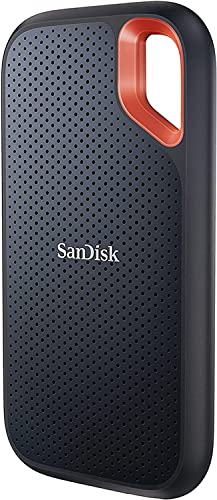
Six portable drives compared on the two specs that decide durability: ingress rating and drop height. The SanDisk 2TB Extreme wins on the combination of sealing, weight and a 5-year warranty.

By Samuel HarrisUpdated 16 min read
On this page
- Best rugged external SSD for remote workers at a glance
- How I screened this field down to six drives
- Which durability rating actually matters?
- Best rugged external SSD for remote workers: the six picks
- 1. Sandisk 2TB Extreme Portable SSD — Best overall
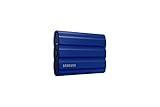
- 2. Samsung T7 Shield Portable SSD 2TB — Best for families
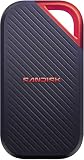
- 3. Sandisk 2TB Extreme PRO Portable SSD — Most versatile
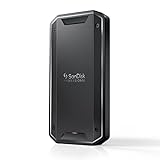
- 4. SANDISK Professional 4TB PRO-G40 SSD — Best premium
- 5. Samsung T7 Portable SSD 1TB Titan Gray — Best compact
- 6. Lexar ES3 1TB Portable SSD Silver — Best budget pick
- Does the interface change what you should buy?
- How much capacity do you actually need?
- What the listings don't tell you
- The verdict
- FAQ
The best rugged external SSD for remote workers is the SanDisk 2TB Extreme Portable SSD, because it pairs an IP65 dust and water rating with 3-meter drop protection at just 1.76 oz, backed by a 5-year warranty. If you need 4TB in one sealed body and your laptop has Thunderbolt 3, the SanDisk Professional PRO-G40 takes over at 4.32 oz and a claimed 3000MB/s read.
Here's the specification that splits this field, and it isn't transfer speed. Four of these six drives quote the same 1050MB/s read ceiling. What separates them is whether the enclosure publishes an ingress rating and a drop height at all. Two of the six don't.
Best rugged external SSD for remote workers at a glance
| Pick | Sealing + drop | Capacity / weight | Price |
|---|---|---|---|
Best overall Sandisk 2TB Extreme Portable SSD |
IP65 claim 3m drop claim |
2TB / 1.76 oz | Check Price |
Best for families Samsung T7 Shield Portable SSD 2TB |
IP65 claim drop claim, no height |
2TB / 3.42 oz | Check Price |
Most versatile Sandisk 2TB Extreme PRO Portable SSD |
IP65 claim 3m drop claim |
2TB / 2.24 oz | Check Price |
Best premium SANDISK Professional 4TB PRO-G40 SSD |
IP68 claim 3m drop, 4000lb crush |
4TB / 4.32 oz | Check Price |
Best compact Samsung T7 Portable SSD 1TB Titan Gray |
none published | 1TB / 2.08 oz | Check Price |
Best budget pick Lexar ES3 1TB Portable SSD Silver |
none published | 1TB / 1.59 oz | Check Price |



How I screened this field down to six drives
I lined up the published specifications for every drive in the external solid state drives category and threw out anything that didn't state a capacity, a weight and a warranty term. That alone cuts a lot of listings. Then I compared the remaining ones on the two figures that describe toughness: the ingress protection rating and the drop height.
What survived is six drives spanning 1TB to 4TB and 1.59 oz to 4.32 oz. Four publish an IP rating. Two do not, and I kept them anyway because they're the two cheapest here and plenty of people carry a drive inside a padded sleeve where sealing matters less.
A note on the search itself. Amazon's results for the best rugged external SSD for remote workers mix genuinely sealed drives with ordinary portable ones, and nothing in any of these listings says a word about remote work as a use case. No drive here is certified for it, because no such certification exists. What I can do is match the published durability figures to the way you actually move a drive around, and say plainly where a listing goes quiet.
Three things I weighted, in order:
- A published ingress rating. A number beats the word "durable" every time.
- A stated drop height. Two drives claim 3m. One claims drop resistance without a figure.
- Warranty length. Three of six state 5 years; three state 3 years.
Which durability rating actually matters?
IP65 means the enclosure is sealed against dust and against low-pressure water jets from any direction. IP68 goes further, adding protection against submersion. That single digit is the largest real gap in this set, and it separates the PRO-G40 from everything else here.
Three drives claim IP65: the SanDisk 2TB Extreme, the SanDisk Extreme PRO and the Samsung T7 Shield. One drive claims IP68: the SanDisk Professional PRO-G40, which also states 4000lb crush resistance and 3m drop resistance on a carpeted concrete floor. That carpet caveat is SanDisk's own wording and it's worth reading twice.
Drop height is where the marketing gets vaguer. SanDisk states 3-meter drop protection on both Extreme models. The T7 Shield's listing claims drop resistance without publishing a height. The T7 and the Lexar ES3 publish neither an IP figure nor a drop figure.
Here's the trick with these numbers. An IP rating describes the seal, not the electronics inside, and a crush rating describes a static load, not a corner impact. Most shoppers read IP65 as waterproof. It isn't. Rain, spilled coffee and dust are what it's for.
Best rugged external SSD for remote workers: the six picks
1. Sandisk 2TB Extreme Portable SSD — Best overall
The lightest sealed drive here at 1.76 oz, with both an IP65 claim and a stated 3m drop height, plus a 5-year warranty.
Best for: someone moving between desks, cafes and job sites with one bag Skip it if: you need more than 2TB in one drive
This is the drive that gets the balance right. At 1.76 oz it's lighter than every other drive here except the Lexar ES3, and the Lexar publishes no durability rating at all. So you're getting a sealed, drop-rated enclosure for less weight than the unsealed Samsung T7 asks. That's the trade nobody else in this set offers.
The dimensions are 0.38 x 3.97 x 2.07 in, so it's the thinnest of the four sealed drives. SanDisk says the enclosure is rated IP65 for dust and water and protected to a 3-meter drop, an upgrade the listing notes over the previous 2-meter and IP55 spec. The claimed ceiling is 1050MB/s read and 1000MB/s write over NVMe. SanDisk also cites 256-bit AES hardware encryption with password protection, and the carabiner loop is a real detail if you clip a drive to a bag rather than burying it.
The 5-year warranty matters more than the speed number here. Two of the three cheaper drives stop at 3 years.
Its loss is capacity headroom. 2TB is the ceiling on this listing, and the PRO-G40 doubles it. It's also the older model of the two SanDisk Extremes, and the newer PRO quotes a far higher speed on the same IP65 and 3m ratings.
Pros:
- Lightest sealed drive in this set at 1.76 oz
- IP65 and 3m drop protection both published
- 5-year limited warranty, matching the two premium picks
- 256-bit AES hardware encryption cited
- Carabiner loop for clipping to a bag
Cons:
- Capped at 2TB on this listing
- Marked as the old model, superseded by the Extreme PRO
- 1050MB/s claim is the slowest of the four sealed drives
- Colour choice limited to black
2. Samsung T7 Shield Portable SSD 2TB — Best for families
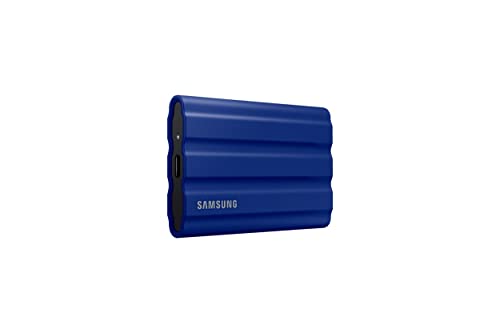
The same 2TB and IP65 pairing as the winner, in a thicker rubberised body that survives a drawer full of cables.
Best for: shared household backups that live in a drawer, not a pocket Skip it if: you want the lightest thing in your bag
The T7 Shield is the drive I'd hand to a household rather than a person. At 3.42 oz and 0.49 x 3.39 x 2.24 in it's the second-heaviest and second-thickest here, and that bulk comes from the textured outer shell. A drive that doesn't slide off a table is worth something when several people handle it.
Samsung claims an IP65 rating for water and dust, plus drop resistance, though the listing doesn't publish a drop height the way SanDisk does. It's built on PCIe NVMe with a claimed 1050MB/s read and 1000MB/s write, and Samsung lists compatibility with PC, Mac, Android devices and gaming consoles. Capacity options run to 4TB per the listing, so this 2TB configuration sits mid-range for the family.
It's the shortest drive in the set at 3.39 in long, which makes it easier to pocket than the numbers suggest. Blue also helps: it's the only non-grey, non-black, non-silver drive here, and telling drives apart in a drawer is a genuine problem.
Against the winner it loses twice. It's nearly twice the weight for identical capacity and the same IP65 claim, and the warranty is 3 years rather than 5.
Pros:
- IP65 dust and water claim at 2TB capacity
- Textured shell resists sliding on a desk
- Shortest body here at 3.39 in
- Only colour-coded drive in this set
- Console and Android compatibility stated
Cons:
- 3.42 oz, nearly double the winner's weight
- Drop resistance claimed without a published height
- 3-year warranty against the winner's 5
- Thickest of the three IP65 drives at 0.49 in
3. Sandisk 2TB Extreme PRO Portable SSD — Most versatile
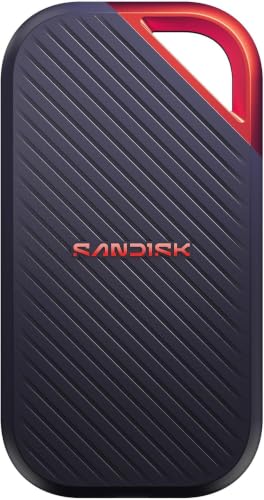
The fastest claim in the set at 4000MB/s read, on the same IP65 and 3m drop ratings as the winner.
Best for: video and photo work with long sustained transfers Skip it if: your laptop tops out at USB 3.2 Gen 2
This is the newest drive here, listed as a 2026 release, and it's the only one in the set claiming a sustained write figure rather than just a peak. SanDisk cites 3100MB/s average sustained write on the 2TB to 4TB models and up to 4000MB/s read. Sustained is the number that decides whether a two-hour transfer finishes at speed or crawls once the cache fills.
It carries the same IP65 rating and 3m drop protection as the winner, in a 2.24 oz body measuring 0.39 x 4.33 x 2.28 in. That's the longest of the three IP65 drives. SanDisk also cites 256-bit AES encryption with password protection, and frames the drive around AI-assisted editing and rendering workflows. The warranty runs 5 years.
Versatility is the right label because it works either way: fast enough for heavy media work, sealed enough to travel, and only 0.48 oz heavier than the winner. Only one seller lists it, which is worth knowing.
The trade-off is blunt. That 4000MB/s ceiling needs an interface that can carry it, and if your machine can't, you've paid a premium price position for a drive that behaves like the winner. Same capacity, same sealing, more money.
Pros:
- 4000MB/s read and 3100MB/s sustained write claims
- IP65 and 3m drop protection published
- Newest listing here, 2026
- 5-year limited warranty
- 256-bit AES encryption cited
Cons:
- Speed claim wasted on slower laptop ports
- Longest of the three IP65 drives at 4.33 in
- Premium price position for the same 2TB and IP65 as the winner
- Only one seller lists it
4. SANDISK Professional 4TB PRO-G40 SSD — Best premium
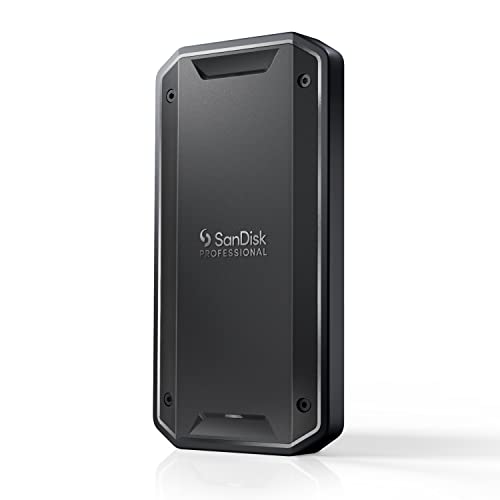
The only IP68 drive here and the only 4TB one, with a stated 4000lb crush resistance.
Best for: Thunderbolt 3 editors who need 4TB in one sealed enclosure Skip it if: you carry your drive loose in a coat pocket
Two specifications make this drive unique in the set. It's the only one rated IP68, which adds submersion protection over IP65, and it's the only 4TB capacity here. Add a claimed 4000lb crush resistance and 3m drop resistance, and it's the drive designed to be stepped on.
SanDisk quotes up to 3000MB/s read and 2500MB/s write over Thunderbolt 3 at 40Gbps, with fallback to USB-C at 10Gbps. Dual-mode compatibility is the practical part: plug it into a Thunderbolt Mac and get the full figure, plug it into a standard USB-C laptop and it still works, slower. The aluminium core is described as pulling heat away from the drive to hold speeds during long transfers, which is a real concern on 4TB jobs. Warranty is 5 years, model SDPS31H-004T-GBCND, released 2023.
The cost is physical. At 4.32 oz it's the heaviest here by 0.9 oz, and at 0.47 x 4.36 x 2.28 in it's the largest in every dimension. This is a bag drive, not a pocket drive. It's also the most expensive pick here, and the listing doesn't publish a colour.
Pros:
- Only IP68 rating in this set
- Only 4TB capacity here
- 4000lb crush and 3m drop resistance claimed
- Thunderbolt 3 at 40Gbps plus USB-C fallback
- 5-year limited warranty and aluminium heat spreader
Cons:
- Heaviest drive here at 4.32 oz
- Largest footprint at 4.36 in long
- Most expensive pick in the set
- Full speed claim needs Thunderbolt 3 hardware
- Colour not stated on the listing
5. Samsung T7 Portable SSD 1TB Titan Gray — Best compact
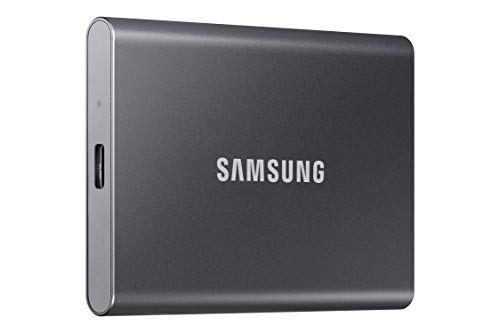
The thinnest drive here at 0.3 in, but it publishes no ingress rating and no drop height.
Best for: a light second drive for documents and photo offloads Skip it if: the drive will ever be rained on
At 0.3 x 3.3 x 2.2 in the T7 is the thinnest drive in this set by a clear margin, thinner than the winner's 0.38 in and well under the T7 Shield's 0.49 in. It weighs 2.08 oz. If your criterion is what disappears into a laptop sleeve pocket, this is it.
Samsung claims 1050MB/s read and 1000MB/s write over USB 3.2 Gen 2, the same ceiling as three others here, and describes it as almost twice as fast as the older T5. The listing cites 4K 60fps recording directly to the drive from cameras and phones, and capacities up to 4TB across the range. This particular configuration is 1TB, making it the joint-smallest here alongside the Lexar. Warranty is 3 years.
Now the honest part. Nothing in this listing publishes an IP rating or a drop height. Samsung's own T7 Shield, one pick above, exists precisely because the T7 isn't sealed. Calling it rugged would be a stretch, and I won't. Buy it for slimness and the second-cheapest position here, not for weather.
Pros:
- Thinnest drive in this set at 0.3 in
- 1050MB/s read claim matching pricier drives
- Second-cheapest pick here
- 4K 60fps direct recording cited
- Sells faster than most of this set
Cons:
- No published IP rating
- No published drop height
- 3-year warranty against 5 years on three rivals
- 1TB is the smallest capacity here
- Heavier than the sealed 2TB winner
6. Lexar ES3 1TB Portable SSD Silver — Best budget pick
The lightest drive in the set at 1.59 oz and the cheapest of the six, with encryption software but no durability ratings.

Best for: a cheap encrypted drive that lives inside a laptop sleeve Skip it if: you need a published ingress or drop rating
The ES3 is the cheapest of the six and the lightest at 1.59 oz, which Lexar also states as 42g. Dimensions are 0.39 x 3.94 x 1.97 in, and Lexar describes it as 10.5mm thick and smaller than a card. At 1.97 in wide it's the narrowest drive here.
Lexar claims USB 3.2 Gen 2 speeds up to 1050MB/s read and 1000MB/s write, matching the ceiling on three other picks. The listing cites DataShield 256-bit AES encryption software, plus compatibility with iPhone 17 series, Android devices, laptops, cameras, Xbox X|S, PS4 and PS5. Note two limits in Lexar's own wording: MagSafe isn't available in this version, and iPhone 14 and older aren't supported. Warranty is 3 years.
Its weakness is the same as the T7's and it's the reason this pick sits last. No IP rating, no drop figure, nothing about crush or water. Only one seller lists it, and it's the only drive here with no release year published. If you want cheap, light and encrypted for a bag that already protects your gear, it does the job. If the point is toughness, spend up.
Pros:
- Lightest drive in this set at 1.59 oz
- Cheapest of the six picks
- Narrowest body at 1.97 in
- 256-bit AES encryption software included
- Broad console and mobile compatibility listed
Cons:
- No IP rating and no drop height published
- MagSafe not supported in this version
- iPhone 14 and older not supported
- 3-year warranty, and no release year listed
- Only one seller stocks it
Does the interface change what you should buy?
Yes, and it's the second-biggest decision after sealing. Four of these six drives quote 1050MB/s over USB 3.2 Gen 2. Two go far beyond that, and both need hardware most laptops don't have.
- USB 3.2 Gen 2, 1050MB/s claim: SanDisk 2TB Extreme, Samsung T7, Samsung T7 Shield, Lexar ES3.
- Thunderbolt 3 at 40Gbps, 3000MB/s claim: SanDisk Professional PRO-G40, with USB-C at 10Gbps as fallback.
- 4000MB/s read claim, 3100MB/s sustained write: SanDisk Extreme PRO.
Check the port on your machine before you pay for headroom. A Thunderbolt 3 drive plugged into an ordinary USB-C socket runs at the socket's pace, not the drive's. The PRO-G40 handles that gracefully because SanDisk publishes both figures.
Sustained write is the number editors should care about. Peak read is a burst; sustained write is what a 400GB card offload actually runs at. Only the Extreme PRO publishes one here, at 3100MB/s.
How much capacity do you actually need?
Capacity in this set runs 1TB to 4TB, and the split is neat. Two drives are 1TB, three are 2TB, one is 4TB.
The 1TB picks are the two cheapest and the two without durability ratings. That correlation isn't an accident, and it's why I'd treat 2TB as the sensible floor if you want a drive with a published IP figure. All three IP65 drives here are 2TB.
Rough guide from the figures on these listings: 4K 60fps video eats space fastest, which is why both SanDisk Extreme models and the T7 mention high-resolution capture in their claims. Photo libraries and document archives sit at the other end, and 1TB covers years of those. The 4TB PRO-G40 exists for people whose single active project won't fit on 2TB.
One thing worth naming. Every drive here is a count of 1, a single unit. Two 1TB drives give you redundancy that one 2TB drive can't, and for backup work that matters more than raw size.
What the listings don't tell you
Reading six product pages side by side, the gaps are as informative as the specs.
- Enclosure material is mostly unstated. Only the PRO-G40 names its build, citing an aluminium core and a pro-grade enclosure. The others describe durability without saying what the shell is made of.
- Drop test conditions vary or vanish. SanDisk publishes 3m on both Extremes, and specifies a carpeted concrete floor for the PRO-G40. The T7 Shield claims drop resistance with no height. Two drives claim nothing.
- Colour is inconsistent. Black, Titan Gray, Blue, Silver, and one listing where colour isn't available at all.
- Encryption differs in kind. SanDisk cites 256-bit AES hardware encryption on the 2TB Extreme. Lexar cites DataShield encryption software. Hardware and software encryption are not the same thing, and the Samsung listings don't mention encryption in their claims at all.
- Cables aren't itemised. None of these listings specifies what cable arrives in the box, so check before assuming a USB-C to USB-C lead is included.
That last one catches people out most. Nothing here promises a specific cable, and the wrong one throttles a fast drive to a crawl.
The verdict
The best rugged external SSD for remote workers is the SanDisk 2TB Extreme Portable SSD. It's the only drive in this set that publishes both an IP65 rating and a 3-meter drop height while weighing 1.76 oz, which is less than the unsealed Samsung T7. Add a 5-year warranty, 256-bit AES hardware encryption and a carabiner loop, and it's the drive that asks the fewest compromises of a bag you carry every day.
Two conditions flip that. First, capacity: if a single project won't fit on 2TB, the SanDisk Professional PRO-G40 is the only 4TB pick here, and its IP68 rating plus 4000lb crush claim make it the toughest sealed enclosure in the set. You pay for that in weight, 4.32 oz against 1.76 oz. Second, sustained throughput: if you offload large media files daily, the SanDisk Extreme PRO's 3100MB/s sustained write claim on the same IP65 and 3m ratings is the upgrade worth having, provided your port can carry it.
The runner-up's exact advantage is grip and identification. The Samsung T7 Shield matches the winner's 2TB and IP65 claim in a textured blue shell that won't slide off a desk or vanish in a drawer of black rectangles. It costs 1.66 oz more and drops to a 3-year warranty.
FAQ
Is a rugged external SSD worth the extra money over a standard portable drive?
A rugged external SSD is worth it when the drive leaves a padded bag. In this set, the sealed picks and the unsealed ones quote the same 1050MB/s ceiling, so you aren't paying for speed. You're paying for a published IP65 rating and a stated 3m drop height. If your drive lives in a desk drawer, that premium buys nothing you'll use.
Which drive gives the best value across this set?
The best value across this set is the SanDisk 2TB Extreme. It sits third of six on price yet delivers 2TB, an IP65 claim, a 3m drop rating, hardware encryption and a 5-year warranty at 1.76 oz. The Lexar ES3 is cheaper but publishes no durability figure at all, and the two premium picks cost more for capability many laptops can't reach.
Does IP65 mean I can submerge the drive?
IP65 does not mean submersion. The 5 in that rating covers low-pressure water jets, so rain, spray and spilled drinks are the intended scenarios. Only the SanDisk Professional PRO-G40 here claims IP68, which adds submersion protection. Three drives claim IP65: the 2TB Extreme, the Extreme PRO and the T7 Shield. Two publish no rating whatsoever.
SanDisk 2TB Extreme or Samsung T7 Shield: which should I pick?
Between the SanDisk 2TB Extreme and the Samsung T7 Shield, take the SanDisk on weight and warranty. Both are 2TB with an IP65 claim, but the SanDisk is 1.76 oz against 3.42 oz, publishes a 3m drop height where Samsung publishes none, and covers 5 years instead of 3. Choose the Shield for its grippy shell and blue colour if several people share it.
What's the most common mistake buying a portable SSD?
The most common mistake is buying peak read speed your laptop can't use. The Extreme PRO claims 4000MB/s and the PRO-G40 claims 3000MB/s over Thunderbolt 3, but a standard USB-C port caps well below that. Check your port first. Then check the cable, because none of these listings specifies what lead ships in the box.
Start with your port and your bag, in that order. If your laptop runs USB 3.2 Gen 2 and your drive rides in a jacket pocket, the SanDisk 2TB Extreme is the sensible default: sealed to IP65, rated to a 3m drop, covered for 5 years, and lighter than every rival except one that publishes no protection at all. That combination is genuinely rare, and it's why it wins here. Confirm your capacity need against your largest active project, then decide whether 2TB holds it or whether the 4TB PRO-G40's extra 2.56 oz is a fair trade.