Best Vertical Mouse When Desk Space Is Tight
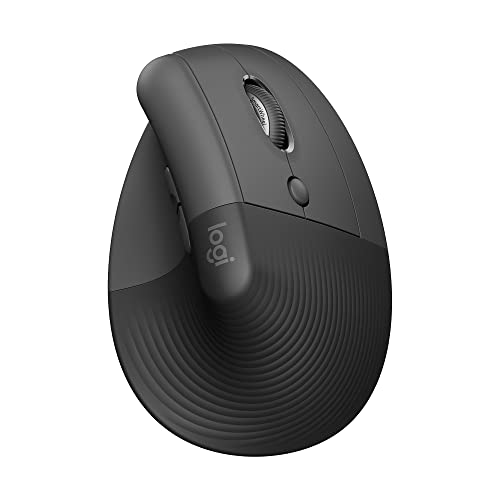
Six vertical mice compared on grip angle, hand-size fit, weight and connection modes, with the Logitech Lift leading and cheaper picks that still make sense.

By Samuel HarrisUpdated 17 min read
On this page
- Best vertical mouse for home office at a glance
- How I cut this field down to six
- Does your hand actually fit a vertical mouse?
- How steep should the grip angle be?
- 1. Logitech Lift Vertical Ergonomic Wireless Mouse — Best overall
- 2. ProtoArc EM11 NL Wireless Ergonomic Vertical Mouse — Best for heavy use
- 3. AOC Ergonomic Mouse — Best for quiet operation
- 4. Anker 2.4G Wireless Ergonomic Mouse — Most versatile
- 5. Lekvey Ergonomic Mouse — Best for families
- 6. Uineer Vertical Ergonomic Mouse — Best budget pick
- Wired, dongle or Bluetooth: which belongs on a home office desk?
- What more money buys in this set
- What the listings don't tell you
- The verdict
- FAQ
The best vertical mouse for home office work is the Logitech Lift, a 4.41 oz upright shaped around a 57-degree grip angle and backed by a 1 year manufacturer warranty. If you'd rather charge over a cable than swap a battery, the ProtoArc EM11 NL is the better buy, with a 500mAh cell and a 2 YEAR warranty. This category isn't for everyone, though. If your hand runs longer than 7.5 in, or you're left-handed, most of what follows is aimed at someone else's grip, and a large ergonomic trackball or a split-body horizontal mouse will treat you better. Everyone else: read on.
Best vertical mouse for home office at a glance
| Pick | Grip & fit | Connection | Price |
|---|---|---|---|
Best overall Logitech Lift Vertical Ergonomic Wireless Mouse |
57° claim small to medium right hands |
Wireless 1 year warranty |
Check Price |
Best for heavy use ProtoArc EM11 NL Wireless Ergonomic Vertical Mouse |
hand length under 7.5 in claim | Bluetooth + USB-A receiver 2 YEAR warranty |
Check Price |
Best for quiet operation AOC Ergonomic Mouse |
52° claim small to medium |
Bluetooth 5.4, 2.4GHz, wired 12 month warranty |
Check Price |
Most versatile Anker 2.4G Wireless Ergonomic Mouse |
4.72"L x 2.94"W body | 2.4G USB receiver 2 AAA, not included |
Check Price |
Best for families Lekvey Ergonomic Mouse |
3.9 x 4.6 x 2.7 in body | 2.4G wireless 1 year warranty |
Check Price |
Best budget pick Uineer Vertical Ergonomic Mouse |
4.57 x 3.03 in footprint | Bluetooth 5.0/4.0 + 2.4G 1 Year warranty |
Check Price |


How I cut this field down to six
I started with the listings, not the marketing. Three cuts did most of the work.
The first cut was hand-size honesty. A vertical mouse only works if your palm meets the flank where the designer put the flank. Two listings here publish a fit range, and I kept both. The ones that said nothing about size got a harder look on published dimensions instead.
The second cut was a stated warranty. Five of the six here publish one. That mattered because a vertical body puts unusual load on the shell and the side buttons, and a warranty line is the closest thing a listing gives you to a durability signal.
The third cut was connection detail. Vague wireless claims went. I wanted to know whether it's Bluetooth, a receiver, a cable, or some combination, because that decides whether it works on a locked-down work laptop.
What survived splits neatly:
- Two picks state a hand-fit range: the Logitech Lift and the ProtoArc EM11 NL.
- Three picks list Bluetooth alongside a 2.4G option: ProtoArc, AOC and Uineer.
- One pick runs on AAA batteries rather than a built-in cell: the Anker.
- Only the ProtoArc publishes a warranty longer than a year, at 2 YEAR.
Nothing here is left-handed. That's a real gap in the category, not an oversight in the shortlist.
Does your hand actually fit a vertical mouse?
Fit decides this purchase more than sensor specs do. On a flat mouse your hand rests on top and a size mismatch just feels a bit off. On a vertical body your hand hangs off the side, and if the shell is short, your little finger drags on the desk all day.
Two of these listings give you a number to check against. ProtoArc states the EM11 NL is designed for hand lengths under 7.5 in (19.05 cm). Logitech says the Lift is a fit for small to medium right hands. AOC lists a Size of Small to Medium. That's three of six pointing at the same audience.
Measure before you buy. Lay your hand flat, palm up, and measure from the crease at your wrist to the tip of your middle finger.
- Under 6.5 in: any of these six should sit comfortably.
- Between 6.5 and 7.5 in: the ProtoArc's stated ceiling still covers you, and the Lift's small-to-medium framing is a reasonable bet.
- Over 7.5 in: no pick here publishes support for you, and I wouldn't guess on your behalf.
The bodies themselves are close. The Lift measures 3 x 5.6 x 3.4 in, the Lekvey 3.9 x 4.6 x 2.7 in, the Anker 3.15 x 3.98 x 3.23 in. The Lift is the tallest of the three at 5.6 in on its longest axis, which is what a taller flank feels like on paper.
How steep should the grip angle be?
Two picks publish an angle, and the gap between them is the most useful number in this whole set. Logitech claims 57 degrees for the Lift. AOC claims 52 degrees for the F-35. Five degrees sounds trivial. It isn't.
A steeper angle rotates your forearm further toward a true handshake and takes more twist out of the wrist. It also asks more of your grip, because more of the mouse's mass sits out to the side of your hand rather than under it. A shallower angle feels closer to a normal mouse and is the easier switch if you've never used vertical before.
Here's the trick with grip angle: the first week lies to you. Whichever angle you pick will feel strange, and that strangeness tells you nothing about whether it's right. What you're watching for is where the soreness lands after ten days. Wrist still twinging means you want more angle. New ache in the outer forearm or the base of the thumb means you took too much at once.
Most shoppers miss that weight interacts with angle. The Lift is 4.41 oz, the Anker 4.48 oz, the Lekvey 3.36 oz and the AOC 3.68 oz. A heavier body at a steeper angle asks your fingers to hold more. The lighter AOC at 52 degrees is the gentler combination on paper. The Uineer publishes no weight at all, which is a genuine blank in its listing.
1. Logitech Lift Vertical Ergonomic Wireless Mouse — Best overall
The Lift pairs the steepest published angle in this set with the clearest fit guidance, which is why it's the default recommendation for a home office desk.
Best for: small to medium right hands that click all day Skip it if: you're left-handed or want a rechargeable battery
What separates the Lift here is that Logitech commits to numbers other brands leave vague. The 57-degree vertical shape is the steepest published figure among these six, five degrees past the AOC's 52-degree claim. Logitech also describes it as ergo-certified, designed and tested against criteria set by ergonomists. That's the manufacturer's claim rather than an independent audit, but it's more than any other listing here offers on the ergonomics itself.
The physical numbers back up the tall-flank design. At 3 x 5.6 x 3.4 in it's the longest body in this set on its principal axis, and 4.41 oz puts it in the middle of the weight spread. Logitech lists a softly textured grip and a snug thumb rest, plus quiet clicks, customizable buttons and a SmartWheel for scrolling. Model 910-006466, released in 2022.
The trade-off is real. This is the most expensive pick here, and it carries a 1 year manufacturer warranty when the mid-priced ProtoArc publishes 2 YEAR. It's also right-hand only, and the listing doesn't state a rechargeable cell, so you're on battery duty.
Pros:
- Steepest published grip angle in this set at 57 degrees
- Longest body here at 5.6 in, suiting a taller flank
- Manufacturer states ergo-certified design testing
- Textured grip plus dedicated thumb rest
- Quiet clicks suited to shared rooms
Cons:
- The most expensive pick in this set
- One-year warranty, half the ProtoArc's stated term
- No rechargeable battery stated in the listing
- Right hands only, like every pick here
2. ProtoArc EM11 NL Wireless Ergonomic Vertical Mouse — Best for heavy use
The only pick here with a warranty beyond twelve months, and the only one that names a hand-length ceiling in inches.

Best for: long shifts across a laptop, desktop and tablet Skip it if: your hand length is over 7.5 in
The 2 YEAR warranty is the headline. Every other pick in this set tops out at twelve months, so the ProtoArc doubles the stated cover while sitting third-cheapest of the six. For someone at the desk eight hours a day, that gap matters more than any sensor number.
ProtoArc is also the most specific listing here on fit, stating the EM11 NL suits hand lengths under 7.5 in (19.05 cm). That's a number you can check with a tape measure before you commit, which no other brand here gives you outright. Power comes from a built-in 500mAh Li-Ion battery recharged over the included Type-C cable, so there's nothing to buy again. It pairs to up to three devices across dual Bluetooth and a wireless mode, useful if a work laptop and a personal machine share the desk.
At 0.55 lb it's the heaviest pick here, noticeably more than the 3.36 oz Lekvey. The listing also flags a limitation directly: pairing works over Bluetooth or the bundled USB-A receiver only, with no USB-C receiver included. On a modern USB-C-only laptop, that means Bluetooth or a hub.
Pros:
- Only pick here with a stated 2 YEAR warranty
- Publishes a specific hand-length ceiling of 7.5 in
- Rechargeable 500mAh cell, no batteries to buy
- Pairs with up to three devices
Cons:
- Heaviest pick in this set at 0.55 lb
- No USB-C receiver included, per the listing
- Only one seller lists it
- No published grip angle to compare
3. AOC Ergonomic Mouse — Best for quiet operation
A 52-degree angle, the widest DPI range in this set and the longest stated battery life, aimed at desks where noise carries.

Best for: shared rooms and calls where clicks carry Skip it if: you want the shallowest possible grip angle
The AOC F-35 makes its case on numbers. AOC claims a 52-degree vertical angle, five degrees shallower than the Lift, which makes it the easier first vertical mouse if you're coming off a flat one. It also claims five DPI steps at 1000/1600/2400/3200/4800, the widest published range in this set, and fully programmable buttons.
Battery figures are the other differentiator. AOC states an 800mAh cell running up to 200 hours without RGB and 40-plus hours with RGB active. That's the largest published capacity here, ahead of the ProtoArc's 500mAh. Connectivity covers three routes: Bluetooth 5.4, a 2.4GHz receiver and a USB wired mode, and it's the only pick in this set listing a wired option, which is the fallback that saves you when a receiver goes missing. At 3.68 oz it's the second-lightest pick, and it's listed in Gray with a Size of Small to Medium.
The cost side is where it slips. This is the second-most expensive pick here despite the shallower angle, and the 12 month warranty plus 45-day return guarantee trails the ProtoArc's stated two years. RGB lighting on a work mouse also cuts stated runtime by a large margin.
Pros:
- Widest published DPI range here, up to 4800
- Largest stated battery capacity at 800mAh
- Only pick listing a wired mode alongside wireless
- Second-lightest body at 3.68 oz
- Bluetooth 5.4 plus 2.4GHz receiver
Cons:
- Second-most expensive pick in this set
- RGB active drops stated runtime to 40-plus hours
- 12 month warranty, half the ProtoArc's term
- Shallower 52-degree angle than the Lift
4. Anker 2.4G Wireless Ergonomic Mouse — Most versatile
The only AAA-powered pick here, which is exactly what you want on a desk you don't sit at every day.

Best for: a second desk where batteries are simpler than charging Skip it if: you refuse to buy AAA batteries
Replaceable batteries are a feature, not a compromise, on any machine you use intermittently. Every other pick here has a sealed cell that self-discharges while it sits. The Anker takes 2 AAA cells, not included, so a mouse left alone for three weeks still works the moment you pick it up. Anker adds an eight-minute inactivity cutoff that disconnects power entirely, which stretches those cells further.
Tracking runs at three steps, 800/1200/1600 DPI, and there are next and previous buttons for browsing. The body measures 3.15 x 3.98 x 3.23 in with a listed size of 4.72"L x 2.94"W, and it weighs 4.48 oz before batteries, making it the heaviest here excluding the ProtoArc. Model AK-98ANWVM-UBA. Connection is a single 2.4G receiver.
The gaps are the oldest listing in the set showing through. There's no published warranty, no published grip angle and no Bluetooth, so it needs a free USB-A port and can't hop between machines. Its top DPI of 1600 is the lowest ceiling here, a third of the AOC's claimed 4800. And batteries add weight on top of 4.48 oz.
Pros:
- Only pick here running on replaceable AAA cells
- Eight-minute inactivity cutoff to save power
- Next and previous buttons for browsing
- Three DPI steps up to 1600
Cons:
- No warranty published in the listing
- No Bluetooth, so it occupies a USB-A port
- Lowest DPI ceiling in this set at 1600
- Batteries are not included
- No published grip angle to compare
5. Lekvey Ergonomic Mouse — Best for families
The lightest published body in this set, second-cheapest of the six, and the easiest to hand across a shared desk.

Best for: a shared desk used by more than one person Skip it if: you need Bluetooth or multi-device switching
Weight is the Lekvey's real argument. At 3.36 oz it's the lightest published figure here, more than an ounce under the Anker's 4.48 oz and well under the ProtoArc's 0.55 lb. On a shared desk where hand sizes differ, a lighter body forgives a mismatch better than a heavy one, because there's simply less mass hanging off the side of a hand that doesn't quite fill the shell.
The body measures 3.9 x 4.6 x 2.7 in, which is the shortest depth in the set at 2.7 in and gives it a lower profile than the 3.4 in Lift. Lekvey lists page-back and page-forward buttons, a rechargeable cell rated at over 150 hours of continuous use per charge, and compatibility across Windows and Mac OS. Model 7L-01, released in 2018, second-cheapest of these six.
It's also the plainest listing here. There's no grip angle, no hand-fit range, no Bluetooth and no multi-device switching, so it lives on one receiver and one machine. The 2018 release date shows in the connectivity, and the warranty field reads simply as 1. Against the ProtoArc's stated two years, that's thin cover for something a household passes around.
Pros:
- Lightest published weight here at 3.36 oz
- Second-cheapest pick in this set
- Lowest profile at 2.7 in depth
- Page-back and page-forward buttons
- Rechargeable, no batteries to buy
Cons:
- No Bluetooth or multi-device switching
- No published grip angle or hand-fit range
- Oldest design here, dating to 2018
- Sparse warranty detail in the listing
6. Uineer Vertical Ergonomic Mouse — Best budget pick
The cheapest of the six, and the only entry-priced pick here that still lists tri-mode connection and four DPI levels.

Best for: a first try at vertical without much outlay Skip it if: you want a published weight before you buy
If you're not sure vertical suits you, this is the cheapest way to find out. What's surprising is how little the Uineer A06 gives up on connectivity. It lists Bluetooth 5.0/4.0 plus 2.4G wireless with switching across up to three devices, matching the ProtoArc on device count at a lower price position. Only the AOC offers more routes, by adding a wired mode.
Uineer claims four DPI levels at 800/1200/1600/2400, a higher ceiling than the Anker's 1600. The design is described as right-handed only, with a curved palm rest, a supportive side finger grip and an angled shape. Ultra-quiet click buttons are claimed too, aimed at offices and shared spaces. Compatibility spans Windows 8/10/11, Mac OS, Chrome OS and Linux. Warranty is listed as 1 Year Manufacturer, model A06, footprint 4.57 x 3.03 in.
The listing is the thinnest here on hard numbers. There's no published weight, which matters on a vertical mouse where mass sits off to the side. There's no grip angle figure either, and no hand-fit range. You're buying on description rather than specification, and that's the honest trade for the lowest price in the set.
Pros:
- Cheapest pick in this set
- Tri-mode connection across up to three devices
- Four DPI levels claimed, up to 2400
- Broad OS support including Chrome OS and Linux
Cons:
- No published weight anywhere in the listing
- No grip angle or hand-fit figure given
- One-year warranty, half the ProtoArc's term
- Only one seller lists it
Wired, dongle or Bluetooth: which belongs on a home office desk?
This is where the home office part gets complicated, and worth saying plainly: none of these listings claims anything specific about home office use. It's a room, not a specification. What actually differs between the picks is how they connect, and that's what a real desk setup turns on.
Three routes exist across this set.
- Bluetooth only or Bluetooth-first: ProtoArc, AOC and Uineer all list it. Best when USB ports are scarce or a dock already eats them.
- 2.4G receiver: every pick except the AOC's wired mode relies on one at some point. Reliable, but it needs a free USB-A port, and the ProtoArc listing warns no USB-C receiver is included.
- Wired: only the AOC lists it. It's the fallback that keeps you working when a dongle vanishes or a battery dies mid-morning.
If your work machine is managed by an IT department, Bluetooth pairing is sometimes blocked or awkward. A receiver usually just works. If your desk sits between two machines, tri-mode switching on the ProtoArc, AOC and Uineer saves you unplugging things all day.
What more money buys in this set
The spread here is genuinely informative, because the specifications don't rise in a straight line with price.
At the entry positions, the Uineer and Lekvey, you get the shape and the basics. The Uineer still manages tri-mode connection and four DPI steps. The Lekvey gives you the lightest published body at 3.36 oz. Neither publishes a grip angle.
In the middle, the ProtoArc and Anker, you buy specificity. ProtoArc names a hand-length limit of 7.5 in and doubles the warranty to 2 YEAR. Anker takes the different road of AAA cells and a power-saving cutoff.
At the top, the AOC and Logitech Lift, you're paying for published ergonomics and refinement. The Lift's 57-degree angle and ergo-certified claim, the AOC's 800mAh cell and 4800 DPI ceiling. Neither beats the ProtoArc's warranty term, which is the clearest case in this set where more money doesn't buy more cover.
What the listings don't tell you
Every pick here is right-handed. Not one lists a left-handed version, and that's the biggest silence in the category.
Three more blanks worth knowing about. Four of six publish no grip angle, so on the ProtoArc, Anker, Lekvey and Uineer you're judging tilt from photographs. Only the Uineer omits a weight, which on a vertical mouse is the figure your fingers feel most. And no listing here states a sensor brand, a click rating or a switch lifespan, so durability claims rest on the warranty term alone.
Software is another gap. Programmable buttons are claimed by the AOC, and Logitech lists customizable buttons on the Lift, but neither listing details what configuration tool you need or which operating systems it runs on. Assume you'll be searching a support site.
The verdict
The Logitech Lift is the best vertical mouse for home office use for most people, because it publishes the steepest grip angle in this set at 57 degrees, states clear fit guidance for small to medium right hands, and pairs a 5.6 in body with a moderate 4.41 oz weight. It's the most complete answer on the ergonomics itself, which is the whole point of buying vertical.
Two conditions flip that. The first is warranty. If you're at this desk full-time and want cover beyond twelve months, the ProtoArc EM11 NL is the pick: 2 YEAR stated, third-cheapest of the six, and the only listing here that names a hand-length ceiling at 7.5 in. That combination of specificity and cover at a mid price is hard to argue with.
The second condition is noise and desk-hopping. If you take calls in a shared room and move between two machines, the AOC F-35 earns the extra outlay with claimed silent clicks, a shallower 52-degree angle that's easier to adapt to, an 800mAh cell rated to 200 hours, and the only wired fallback in this set.
Left-handed? None of these six is built for you, and no amount of ranking changes that.
FAQ
Is a vertical mouse worth it for home office work?
A vertical mouse is worth it if your wrist aches from twisting flat all day, since the upright shape rotates your forearm toward a handshake position. Logitech claims 57 degrees on the Lift, AOC 52 degrees on the F-35. Expect a week of awkwardness while your grip relearns the motion. If you have no discomfort now, the benefit is preventative rather than immediate.
How do I find the best vertical mouse for home office use on a budget?
Finding the best vertical mouse on a budget means checking which specifications the cheaper listings still publish. The Uineer A06 is the cheapest here and still lists Bluetooth 5.0/4.0 plus 2.4G with three-device switching and four DPI levels up to 2400. The Lekvey is second-cheapest at 3.36 oz. Both skip a published grip angle, so you're buying the shape on description.
What hand size fits a vertical mouse?
Hand size fits a vertical mouse when your palm meets the flank without your little finger scraping the desk. ProtoArc states the EM11 NL suits hand lengths under 7.5 in (19.05 cm). Logitech describes the Lift as suiting small to medium right hands, and AOC lists Small to Medium. Measure wrist crease to middle fingertip before ordering, because no pick here publishes support above 7.5 in.
Logitech Lift or ProtoArc EM11 NL: which should I buy?
Logitech Lift or ProtoArc comes down to angle against warranty. The Lift publishes 57 degrees, the steepest here, weighs 4.41 oz and carries 1 year cover at the highest price position. The ProtoArc states 2 YEAR, a 500mAh rechargeable cell and three-device pairing at a mid price, but weighs 0.55 lb, the heaviest in this set.
What mistake do first-time vertical mouse buyers make?
The mistake first-time vertical mouse buyers make is judging the fit in week one. Every upright feels wrong initially because your grip has years of flat-mouse habit behind it. Give it ten days, then note where any soreness sits. Lingering wrist twinge means you want more angle than 52 degrees; a new thumb-base ache means you took too much tilt too fast.
Measure your hand first, then pick. That one step rules out more of this category than any specification comparison will, and it takes thirty seconds with a tape measure. If you land under 7.5 in and you're right-handed, the Logitech Lift is the safest default here, because it's the only pick that publishes both the steepest angle in the set and a fit range it was designed against. Order it, give it ten working days without judging it, and pay attention to where the ache moves. That's the real test, and only your own desk can run it.