Best Vertical Mouse for Engineers: Logitech Lift Wins
Five vertical mice compared on angle, weight and hand fit, with a clear winner for engineers who spend all day in CAD, terminals or PCB layout tools.

By Samuel HarrisUpdated 14 min read
On this page
- Best vertical mouse for engineers at a glance
- How I narrowed the field to five
- The specification that actually decides it
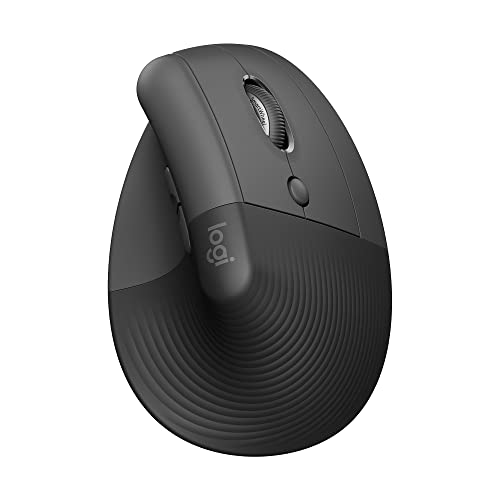
- 1. Logitech Lift Vertical Ergonomic Wireless Mouse — Best overall
- 2. Logitech MX Vertical Wireless Mouse Ergonomic Design — Best premium
- 3. AOC Ergonomic Mouse — Best lightweight
- 4. ProtoArc EM11 NL Wireless Ergonomic Vertical Mouse — Best budget pick
- 5. Anker 2.4G Wireless Ergonomic Mouse — Best for families
- Hand size is the hidden gatekeeper
- What about programmable buttons for CAD?
- Wired, wireless or Bluetooth: which is safer for a work laptop?
- The verdict
- FAQ
The best vertical mouse for engineers is the Logitech Lift Vertical Ergonomic Wireless Mouse, because its 57° angle and 4.41 oz body suit the long, mostly-scroll-and-click days that CAD, PCB layout and code review demand. Engineers with medium to large hands should size up to the Logitech MX Vertical, which keeps the same 57° angle in a heavier 8 oz shell tuned for bigger palms. Most vertical-mouse guides compare DPI numbers first. That is not what decides it for engineers.
Best vertical mouse for engineers at a glance
| Pick | Angle | Weight | Price |
|---|---|---|---|
Best overall Logitech Lift Vertical Ergonomic Wireless Mouse |
57° | 4.41 oz | Check Price |
Best premium Logitech MX Vertical Wireless Mouse |
57° | 8 oz | Check Price |
Best lightweight AOC Ergonomic Mouse |
52° claim | 3.68 oz | Check Price |
Best budget pick ProtoArc EM11 NL Wireless Ergonomic Vertical Mouse |
Angle not listed | 0.55 lb | Check Price |
Best for families Anker 2.4G Wireless Ergonomic Mouse |
Angle not listed | 4.48 oz | Check Price |



How I narrowed the field to five
I started with vertical mice on Amazon's Keyboards, Mice & Accessories shelf and screened them on published specifications only. Anything without a stated weight, dimensions or angle went out first, because an engineer cannot size a peripheral from marketing copy alone.
Three cuts did most of the work:
- No angle and no dimensions. If neither field is on the listing, sizing to hand length becomes a guess.
- Gaming-mouse crossovers. Palm-grip shells at low tilt are not vertical mice, no matter how the listing is titled.
- Left-hand-only shells with no right-hand version. All five picks here are right-handed; the Anker and MX Vertical listings say so explicitly.
What survived is a set of five: two Logitech models that share a 57° angle, one AOC at a claimed 52°, and two entry-tier picks from ProtoArc and Anker whose listings do not publish an angle. That absence is itself informative, and it shows up in the ranking.
The best vertical mouse for engineers has to survive an eight-hour day of mixed clicking, scrolling and dragging, which is why weight and hand-fit did more of the sorting than DPI ever could.
The specification that actually decides it
Most buyers compare DPI. Engineers should compare angle and weight first, then hand length, then DPI. Here is why.
A vertical mouse works by rotating your forearm out of pronation. The Logitech Lift and Logitech MX Vertical both sit at 57°, and Logitech says that angle was chosen with ergonomists to reduce muscular activity by about 10 percent versus a flat mouse. The AOC F-35 listing claims 52°. The ProtoArc EM11 NL and the Anker AK-98ANWVM-UBA do not publish an angle at all, so you are trusting the shell shape without a number to check.
Weight matters because you lift a mouse hundreds of times a session. The lightest here is the AOC at 3.68 oz, then the Logitech Lift at 4.41 oz, then the Anker at 4.48 oz, then the ProtoArc at 0.55 lb (about 8.8 oz on the same scale), then the Logitech MX Vertical at 8 oz. A heavier body feels planted for CAD nudging; a lighter body suits fast cursor sweeps across dual monitors.
DPI is a distant third. All that matters is that the sensor has enough headroom for your screen setup: the MX Vertical publishes 4000 DPI, the AOC claims up to 4800 DPI in five steps, the Anker lists 800/1200/1600. Any of them clears a 4K panel.
1. Logitech Lift Vertical Ergonomic Wireless Mouse — Best overall
A 57° ergo-certified shell in a 4.41 oz body, sized for the hands most engineers actually have.
Best for: engineers with small to medium right hands running CAD or IDE work all day Skip it if: your hand is larger than about 7.5 inches or you are left-handed and need a mirrored shape
The Lift is the pick because it lands in the middle of every axis that matters. The 57° angle is the same one Logitech uses on the MX Vertical, so you get the posture benefit without the 8 oz shell. At 4.41 oz and 3 x 5.6 x 3.4 in, it fits small-to-medium right hands, which is the range Logitech publishes for it. The 2022 release means the firmware and Logi Options+ software are current.
Inside the set, the Lift is the only pick with both a published 57° angle and a body under 5 oz. Logitech says the Lift is ergo-certified against criteria from leading ergonomists, and the listing calls out whisper-quiet clicks and a SmartWheel for scrolling long drawings and long files. The trade-off against the MX Vertical is that the Lift is not built for larger palms, and there is no adjustable cursor-speed switch on the shell. Against the entry picks, the Lift costs more and the warranty runs a year rather than two.
Pros:
- 57° angle matches Logitech's ergonomist-tested reference
- Light at 4.41 oz for a full-day scrolling shift
- Ergo-certified according to the listing
- Sized for small to medium right hands, the common range
- Current 2022 design with recent software support
Cons:
- One-year manufacturer warranty is shorter than the ProtoArc
- Right-hand only in this listing
- Premium price position in this set
2. Logitech MX Vertical Wireless Mouse Ergonomic Design — Best premium
The same 57° geometry as the Lift, in an 8 oz shell built for medium-to-large hands.

Best for: engineers with medium to large hands who want the highest sensor resolution here Skip it if: your hand runs small or you want a published warranty on the box
The MX Vertical is the pick when the Lift is too small. Logitech's own size label calls this a mouse for medium-to-large hands, and the 3.09 x 4.72 x 3.11 in dimensions and 8 oz weight match that brief. The 57° angle is identical to the Lift, so the posture story is the same; what changes is the palm coverage and the planted feel.
Logitech says the MX Vertical's handshake position reduces muscular activity by about 10 percent versus a standard mouse, and the shell carries a 4000 DPI sensor with a cursor-speed switch on the top. For an engineer who moves between fine CAD work and broad multi-monitor sweeps, that on-shell switch is genuinely useful, and none of the other four picks offer it. The listing traces the design to 2018, which shows in the price position: this is the most expensive pick here, and its warranty is listed only as available on request rather than printed on the page. Against the Lift, you gain palm coverage and the DPI switch. Against the AOC, you lose more than four ounces.
Pros:
- 57° angle, matched to Logitech's ergonomist criteria
- On-shell cursor-speed switch, unique in this set
- 4000 DPI sensor from the listing
- Sized for medium to large hands, the group the Lift excludes
- Thumb rest positioned for the handshake grip
Cons:
- The heaviest pick here at 8 oz
- Warranty not printed on the listing, only on request
- The most expensive pick in this set
- Design dates from 2018
3. AOC Ergonomic Mouse — Best lightweight
The lightest body here at 3.68 oz, with the highest DPI ceiling in the set.

Best for: engineers who drag the mouse across large monitors and want the highest DPI ceiling in this set Skip it if: you prefer a heavier body that stays put, or you distrust three-mode radios on locked-down machines
The AOC F-35 is the lightweight play. At 3.68 oz it is more than half an ounce below the Lift and less than half the weight of the MX Vertical, and AOC says the shell sits at a 52° angle in the same handshake orientation. The listing publishes five DPI steps from 1000 to 4800, so a 4K or ultrawide user has plenty of range without dragging.
Two other things make it stand out in this set. It is the only pick to publish triple-mode connectivity: Bluetooth 5.4, a 2.4GHz receiver, and USB wired, which matters when a work laptop's Bluetooth is disabled by policy. AOC says the battery is an 800mAh cell rated for up to 200 hours without RGB, and the buttons are programmable. Warranty is stated as 12 months plus a 45-day return window. The trade-offs: the 52° angle is a manufacturer claim rather than an ergo-certified figure, and the small-to-medium size label means larger hands will still be more comfortable on the MX Vertical.
Pros:
- Lightest in the set at 3.68 oz
- Up to 4800 DPI across five steps, per the listing
- Bluetooth, 2.4GHz and wired, all three modes
- Programmable buttons for CAD or IDE shortcuts
- 12-month warranty and 45-day return listed
Cons:
- 52° angle is a manufacturer claim
- Small-to-medium sizing only
- Lightweight shell may feel less planted for fine nudging
4. ProtoArc EM11 NL Wireless Ergonomic Vertical Mouse — Best budget pick
The cheapest of the five, with a two-year warranty and a rechargeable 500mAh cell.

Best for: engineers trialling vertical shape for the first time on a personal budget Skip it if: you need a USB-C receiver in the box or you have larger hands
The ProtoArc EM11 NL is the pick if you are not yet sure a vertical mouse will suit you. It is the cheapest here, and ProtoArc publishes a two-year warranty, which is the longest in this set. The rechargeable 500mAh cell takes a Type-C cable, and the listing supports pairing to up to three devices across Bluetooth and a 2.4GHz USB-A receiver. Sizing is specific: ProtoArc says it is designed for hand lengths under 7.5 inches, which puts it in the same small-to-medium bracket as the Lift and the AOC.
The listing does not publish a tilt angle, and that is the real cost of the low price position: you are trusting the shell shape without an ergonomist-verified number. ProtoArc is also clear that the included receiver is USB-A only, so a modern USB-C laptop will need a hub or the Type-C cable in wired mode. Against the Lift, you save money and gain a longer warranty; you lose the published 57° angle and the Logi Options+ software integration many engineers already run.
Pros:
- Cheapest pick in this set
- Two-year warranty, longest here
- Bluetooth plus 2.4GHz receiver, three-device pairing
- Rechargeable 500mAh cell over Type-C
- Sized to hand lengths under 7.5 inches
Cons:
- Tilt angle not published on the listing
- USB-A receiver only, no USB-C receiver included
- Not suited to larger hands
5. Anker 2.4G Wireless Ergonomic Mouse — Best for families
A right-hand vertical shell at a modest price, on AA batteries a shared desk can swap in a second.

Best for: a shared home-office desk where two people take turns Skip it if: you want a rechargeable battery or Bluetooth pairing
The Anker is the second-cheapest here and the pick for a shared setup. It runs on 2 AAA batteries, which the listing notes are not included, and Anker says the mouse enters a power-saving mode after eight minutes of inactivity. For a desk two people share, swappable AAAs are more forgiving than a rechargeable cell that has run flat mid-meeting. The shell weighs 4.48 oz, close to the Lift, and Anker lists three DPI steps at 800/1200/1600 for coarser control.
There are compromises worth naming. The listing does not publish a tilt angle, there is no Bluetooth mode, and warranty details are not printed on the page in a specific number of years. Against the Lift, the Anker gives up published ergonomics data, current software support and the 57° figure; against the ProtoArc, it gives up rechargeable power and multi-device pairing. What it wins on is simplicity: a 2.4GHz receiver, next and previous buttons for browsing, and a shell that has been on sale long enough to be a known quantity in engineering-adjacent home offices.
Pros:
- Second-cheapest pick here
- AA batteries suit a shared or backup desk
- Power-saving mode after eight minutes idle
- 800/1200/1600 DPI steps for coarse control
- Simple 2.4GHz receiver, no pairing dance
Cons:
- Tilt angle not published
- No Bluetooth, no rechargeable cell
- Warranty term not stated in years on the listing
- Batteries not included
Hand size is the hidden gatekeeper
Almost every complaint about vertical mice traces back to a mismatch between shell size and hand length. Measure from the base of your palm to the tip of your middle finger before you buy.
- Under 7.5 in: the Logitech Lift, the ProtoArc EM11 NL and the AOC F-35 all target this range. The ProtoArc listing states the 7.5 in ceiling explicitly.
- 7.5 in and up: the Logitech MX Vertical is the only pick here that Logitech labels for medium-to-large hands.
- Between sizes: the MX Vertical's 8 oz feel is not for everyone. If your hand is right on the boundary, the Lift is the safer default because the lighter shell forgives a slightly loose grip.
The best vertical mouse for engineers is the one you can rest a full palm on without curling a finger under the shell. If your fingertip clears the front by more than a knuckle, the shell is too small.
What about programmable buttons for CAD?
Engineers rarely stay in one application. A vertical mouse earns its keep when the side buttons map to things you do a hundred times a day: view rotate, undo, escape, next tab.
The AOC listing says its buttons are fully programmable. The Logitech Lift and MX Vertical work with Logi Options+, which lets you set per-application profiles: a pan-and-orbit set in Fusion 360, an undo-and-tab-switch set in VS Code, a scroll-through-page set in a browser. That per-application layer is why the two Logitech picks are the strongest for CAD and IDE work, even though the AOC has more buttons on paper.
The Anker and ProtoArc listings do not detail a per-application profile system, so if that matters to your workflow, treat their extra buttons as browser back-and-forward rather than macro slots.
Wired, wireless or Bluetooth: which is safer for a work laptop?
Locked-down engineering laptops sometimes disable Bluetooth or restrict USB devices, so the right radio depends on your IT policy.
- 2.4GHz USB-A receiver only: Anker. Simple, works on almost anything with a USB-A port.
- Bluetooth plus 2.4GHz receiver: ProtoArc EM11 NL. The receiver is USB-A only, and the Type-C cable is for charging, not data.
- Bluetooth, 2.4GHz and wired: AOC F-35. The only triple-mode pick here.
- Logitech wireless with a Logi receiver: the Lift and the MX Vertical.
If your laptop is USB-C only and Bluetooth is blocked, the AOC's wired fallback is the safest bet in this set. If Bluetooth is allowed, any of the four wireless picks work; if only 2.4GHz is trusted, the Anker's simplicity is a feature rather than a limit.
The verdict
For most engineers, the Logitech Lift Vertical Ergonomic Wireless Mouse is the right default. It combines the 57° angle Logitech developed for the MX Vertical with a 4.41 oz shell sized for small-to-medium right hands, which covers the majority of adult hand lengths. Logi Options+ lets you build per-application button profiles for CAD, IDE and browser work, and that is the workflow lever that vertical mice most often waste.
Two conditions flip the recommendation. If your hand length is above about 7.5 inches, size up to the Logitech MX Vertical: same 57° angle, medium-to-large sizing, and the on-shell DPI switch is worth having when you jump between fine CAD nudges and multi-monitor sweeps. If your hand is on the smaller side and you drag the cursor across a lot of screen real estate, the AOC F-35 at 3.68 oz and up to 4800 DPI is the lighter, higher-headroom option, with the triple-mode radio as a bonus on locked-down laptops. The ProtoArc is the cheapest way into the shape, and the Anker suits a shared desk that runs on swappable AAs.
FAQ
Is a vertical mouse actually better for engineers doing long CAD sessions?
A vertical mouse rotates your forearm out of pronation, which is the position most linked to forearm fatigue on long sessions. Logitech says its 57° shells reduce muscular activity by about 10 percent versus a standard mouse. For CAD or PCB work that runs hours at a time, that posture shift is what you are paying for; DPI and click count matter less.
Best vertical mouse for engineers on a tight budget: which of these picks?
Best vertical mouse for engineers at the low end here is the ProtoArc EM11 NL. It is the cheapest pick, ProtoArc publishes a two-year warranty, and it pairs over Bluetooth or a 2.4GHz USB-A receiver to up to three devices. The listing does not publish a tilt angle, so you are trusting the shell shape rather than an ergonomist-verified figure, but the sizing is stated for hand lengths under 7.5 inches.
How does the Logitech Lift compare to the Logitech MX Vertical for daily engineering work?
The Logitech Lift compares to the MX Vertical as the lighter, smaller-hand version of the same 57° geometry. Lift is 4.41 oz and sized for small-to-medium right hands; MX Vertical is 8 oz for medium-to-large hands and adds an on-shell cursor-speed switch. Same angle, same software ecosystem. Pick by hand length first, not by price position.
Will a vertical mouse work with a modern USB-C only laptop?
A vertical mouse will work with USB-C laptops in most cases, but check what the receiver plug is. The ProtoArc, Anker and Logitech picks here all ship a USB-A receiver, not USB-C, so a USB-C-only laptop needs a hub or an adapter. The AOC F-35 supports Bluetooth 5.4 and a wired mode as well as its 2.4GHz receiver, which gives you the most fallback options.
What DPI should an engineer look for in a vertical mouse?
DPI matters less than most listings suggest. For a 1080p monitor, 1200 to 1600 DPI is plenty; for a 4K or ultrawide setup, aim for a sensor with at least 3000 DPI so you are not dragging. The MX Vertical publishes 4000 DPI and the AOC claims up to 4800. Both clear a dual-4K workstation without acceleration tricks.
A vertical mouse is the kind of upgrade you feel on day three rather than day one. Start with a hand measurement, then match the shell to it: the Lift for most right hands, the MX Vertical when the Lift feels cramped, the AOC when the shell needs to be light and the radio needs options. Order Logi Options+ or your equivalent software the same day the mouse arrives, and spend fifteen minutes mapping the side buttons to the two commands you use most in your primary application. That single setup step is what separates a mouse that quietly saves your forearm from one that sits in a drawer.